

Who to call for sump pump repair in Fairbanks areas
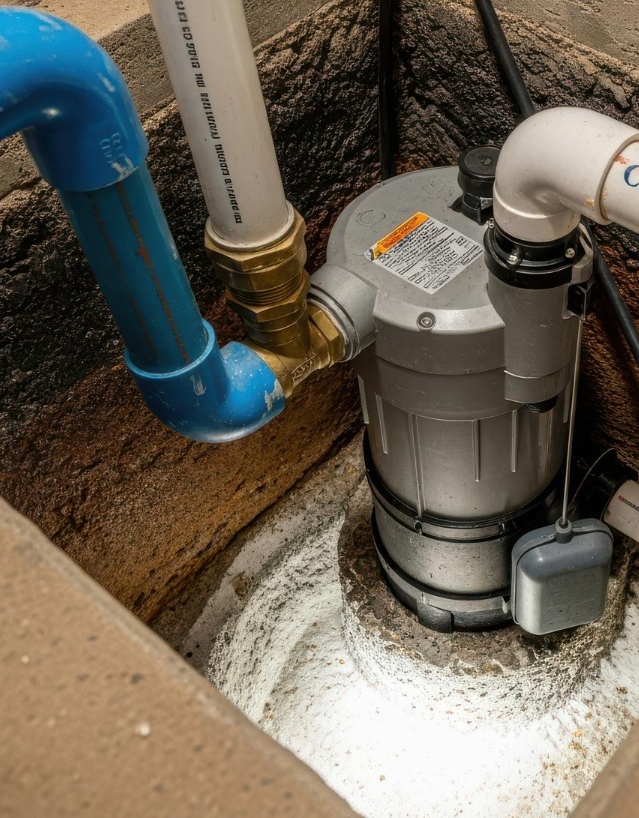
A plumber for sump pump repair is who most Fairbanks homeowners need when the system that keeps their basement or crawl space dry stops working reliably. The problem with sump pump failures is timing. The pump that ran without issue through a dry stretch will often show its first sign of trouble during a rapid snowmelt event or a sustained rain period, exactly when a functioning system matters most. By the time water appears on the floor, the window to catch the failure before it becomes a damage event has already closed.
In this article, you'll learn what causes sump pumps to fail in Fairbanks conditions, why the pump itself is not always the source of the problem, what a plumber evaluates beyond the unit sitting in the pit, and how to think clearly about whether a repair, a replacement, or an added backup system is the right response.
Through the topics below, you'll learn why sump pump problems are rarely as simple as they first appear and what separates a durable fix from a temporary one.
- The pump usually fails when the basement already needs it
- Water in the pit does not always mean the pump is the problem
- A plumber looks beyond the pump sitting in the basin
- Repair, replacement, and backup power are not the same decision
Keep reading to understand each part of the system, what goes wrong and why, and how a licensed plumber approaches the diagnosis in an Alaskan home.
The pump usually fails when the basement already needs it
Sump pump failures rarely surface during dry conditions when the stakes are low. They show up during high-water events when the pit fills quickly and the pump is expected to run continuously for hours.
A silent pump during rising water is the warning homeowners fear most
A pump that does not activate when the pit water rises past the float trigger is the failure mode with the most immediate consequences. Water continues entering the pit, overflows onto the floor, and begins migrating toward finished areas, stored belongings, and structural components before the homeowner realizes the system is not running.
The silent failure during rising water usually has one of four causes:
- Float switch failure: The float that triggers the pump motor is stuck in the down position and is not sending the activation signal, even as water rises past the normal trigger point.
- Motor burnout: The motor windings have failed from overheating or prolonged exposure to moisture, and the pump does not respond to power at all.
- Loss of power to the circuit: The dedicated outlet or circuit breaker serving the pump has tripped or failed, and the pump has no power regardless of water level.
- Impeller obstruction: Sediment, debris, or a small object has jammed the impeller, preventing the motor from turning even though it receives power.
Each of these has a different correction, and identifying which one applies is the first task of any sump pump service call.
Strange cycling can mean the pump is working too hard
A pump that runs in short, frequent bursts rather than sustained cycles is short-cycling, and it is one of the more overlooked failure patterns in residential sump systems. Short cycling places repetitive start-stop stress on the motor, which is designed for a finite number of starts per hour. Exceeding that threshold accelerates winding wear and overheating.
Short cycling in a sump pump is most commonly caused by:
- A float switch set too low, triggering the pump before enough water accumulates to justify a full cycle
- A failed check valve that allows discharged water to drain back into the pit, immediately refilling it and triggering the pump again
- An undersized pit that holds too little water volume to sustain a cycle before the pump empties it and shuts off
- High groundwater conditions that are continuously feeding the pit faster than the pump's off-cycle allows recovery
A plumber diagnosing short cycling will watch the pump run through several cycles, check the float trigger position, test the check valve for backflow, and assess whether the pit volume is matched to the pump's flow rate capacity.
Burning smells or humming can point to a motor that is stuck or failing
A burning smell near the sump pit or an audible hum without pump operation are two of the clearest physical indicators that the motor is in distress. The hum indicates that the motor is receiving power and attempting to turn but is mechanically prevented from doing so. The burning smell indicates that current is flowing through windings that are not moving, generating heat without doing work.
Both conditions require immediate attention. A motor that is running hot without pumping is not a waiting problem. Continued power to a stalled motor will complete the winding failure and in some cases create a fire or electrical hazard in the basement space. The correct response is to disconnect power to the pump circuit, avoid the standing water in the pit if any is present, and contact a licensed plumber rather than attempting to free the impeller manually while the unit is powered.
Water in the pit does not always mean the pump is the problem
One of the most common diagnostic errors homeowners make with sump systems is assuming that water in the pit means the pump has failed. Several other components fail first, more frequently, and more cheaply than the pump motor itself.
Float switches can stick before the pump itself fails
The float switch is a mechanical or electronic device that monitors water level in the pit and signals the pump motor to activate when water reaches the trigger point. Mechanical float switches, the type that use a buoyant ball on a tethered arm, are the most common in residential installations and the most prone to failure.
The float can become tangled against the pit wall or the pump body, holding it in the down position regardless of actual water level. It can also become waterlogged over time, losing the buoyancy needed to rise with the water surface. In either case, the pump motor itself may be in perfect working condition. Replacing or adjusting the float switch is a fraction of the cost of replacing the pump and resolves the activation failure completely.
Electronic pressure-based switches, which use a diaphragm or sensor rather than a mechanical arm, are less prone to tangling but can fail due to scale buildup on the sensor surface or diaphragm fatigue. A plumber checking a non-activating pump will always test the float switch independently before drawing any conclusion about the motor condition.
Discharge lines can block or freeze and force water back inside
The discharge line carries water from the pump to an exterior termination point, typically several feet away from the foundation. In Fairbanks, that line passes through or alongside a foundation wall and exits into outdoor conditions that drop well below freezing for extended periods. A discharge line that is not properly sloped, insulated, or terminated above the frost line is a predictable failure point.
A frozen or blocked discharge line does not stop the pump from running. It stops the water from leaving. The pump activates, moves water into the discharge line, and the water either backs up into the pit when the pump shuts off or, in a continuous-run scenario, overpressures the line. Common discharge line problems in cold-climate installations include:
- Freeze blockage at the exterior termination point during sustained cold periods
- Back-pitched sections of the line that allow water to pool and freeze from the inside
- Root intrusion or debris accumulation at the exterior end of a buried discharge line
- A missing or failed check valve allowing discharged water to drain back into the pit between cycles
Identifying a discharge line obstruction requires tracing the full run of the line, including the exterior termination, which is part of a thorough plumber assessment during a sump pump repair visit.
Power supply issues can mimic a dead pump
A pump that does not respond to rising water may simply have no power. GFCI outlets, which are required by the National Electrical Code in locations subject to moisture, can trip without any visible indicator light, cutting power to the pump without any obvious sign at the outlet itself. The circuit breaker serving the pump can also trip softly, a condition where the breaker appears to be in the on position but has partially released the contact internally.
Before a plumber diagnoses the pump as failed, the power supply path will be verified: the outlet will be tested for voltage, the GFCI reset will be confirmed, and the breaker will be cycled fully off and back on to confirm it is holding. In many cases, a pump that appeared completely dead resumes normal operation once power is properly restored. This is a simple step that prevents unnecessary equipment replacement.
A plumber looks beyond the pump sitting in the basin
A sump system is not just the pump. The check valve, the pit dimensions, and the discharge routing all affect how well the system performs and how long the pump lasts. Evaluating only the motor while leaving surrounding components in poor condition produces a repair that will return quickly.
The check valve can decide whether water leaves or returns
The check valve is a one-way valve installed in the discharge line above the pump, designed to prevent water from draining back into the pit when the pump shuts off. Without a functioning check valve, the water column in the discharge line returns to the pit at the end of every pump cycle. The pit refills partially, the float triggers again, and the pump short-cycles through repeated small runs rather than clearing the pit efficiently.
A failed check valve also means the pump must re-lift the full water column from zero at the start of every cycle rather than beginning from a primed line. That additional head pressure increases the workload on the motor and accelerates wear.
Check valve failure modes include:
- Stuck-open flapper due to debris lodged in the valve seat
- Cracked or warped valve body from freeze-thaw cycling
- Worn elastomeric flapper that no longer seats fully, allowing slow backflow
- Incorrect orientation during installation, rendering the valve non-functional from the first day
Replacing a check valve is a straightforward repair that takes less time than motor replacement and costs considerably less. It is one of the first components a plumber will inspect when short cycling or frequent activation is part of the complaint.
Pit size and pump capacity affect how often the system cycles
The sump pit is the collection basin that holds incoming groundwater until the pump activates. Its volume, measured in gallons, determines how much water must accumulate before the pump runs and how much the pump clears per cycle. A pit that is too small relative to the pump's flow rate will cause the pump to exhaust the available water quickly and shut off, only to restart seconds later as water continues entering.
The relationship between pit volume and pump performance follows a straightforward principle: the pit must hold enough water to allow the pump to run for at least one to two minutes per cycle under normal inflow conditions. A standard residential submersible pump rated at 30 to 50 gallons per minute will empty a small pit in seconds if the pit volume is below approximately 20 gallons, producing the short-cycling pattern described earlier.
According to the U.S. Army Corps of Engineers, groundwater management in residential foundations requires that sump pit sizing account for both peak inflow rates and pump flow capacity, with adequate volume to prevent motor overheating from excessive cycling. A plumber assessing a frequently cycling pump will measure the pit dimensions and calculate whether the combination of pit volume and pump rating is appropriate for the inflow rate the home is experiencing.
Poor discharge routing can create repeat moisture problems
Where the discharge line terminates and how it is routed have a direct effect on whether the water the pump removes stays removed. A line that terminates too close to the foundation wall, on a grade that slopes back toward the house, or into a drainage path that returns to the basement perimeter will reintroduce water to the exact area the pump is working to keep dry.
Best practices for sump discharge routing in a Fairbanks installation include:
- Terminating the discharge at least 10 feet from the foundation, on a grade that drains away from the structure
- Avoiding direct discharge into a municipal storm drain without confirming local code compliance
- Insulating buried sections of the discharge line or using freeze-resistant discharge emitters designed for cold climates
- Routing the line away from neighboring properties and away from any area that drains toward the foundation during snowmelt
A plumber assessing a sump system with recurring moisture problems despite a functional pump will trace the full discharge path as part of the diagnosis. In many cases, rerouting or extending the discharge line resolves a moisture pattern that appeared to be a pump performance issue.
Repair, replacement, and backup power are not the same decision
Sump system service calls do not always end with a single answer. The pump condition, the age of the installation, and the consequences of a future failure during an outage are three separate considerations that each point to a different decision.
A newer pump with one bad part may be worth repairing
A residential submersible sump pump installed within the last three to five years that has failed due to a specific component, such as a float switch, a check valve, or an impeller obstruction, is generally worth repairing rather than replacing. The motor windings and the volute housing are not worn. The rated pump capacity still matches the original installation design. Replacing the failed component restores the system to full function at a fraction of replacement cost.
The repair-versus-replace framework for sump pumps follows several practical indicators:
- Age under five years with an isolated component failure: Repair is almost always the right call.
- Age five to ten years with a motor failure: Evaluate whether motor replacement cost approaches new unit cost before committing.
- Age over ten years with recurring failures: Replacement is typically more economical than continued repair investment.
- Any age with a capacity mismatch: Replacement with a correctly sized unit is necessary regardless of whether the current pump could be repaired.
A licensed plumber will present this framework clearly rather than defaulting to replacement when repair is the more appropriate solution.
An undersized pump can keep failing even after service
A pump that is repaired or replaced with an identical unit but remains undersized for the inflow rate the pit experiences will continue to fail on the same timeline. The motor is not failing randomly. It is failing because it is running continuously at or near its rated capacity, which overheats the windings and shortens service life below the manufacturer's expected rating.
Undersizing in sump pump installations is more common than most homeowners realize. The original pump may have been selected for a different basement configuration, installed before a drainage modification increased groundwater inflow, or simply specified at the low end of the capacity range to reduce initial cost. In Fairbanks, spring thaw events can push inflow rates significantly above what the system was designed for, exposing an undersizing problem that does not appear during drier months.
The Fairbanks service area experiences rapid snowmelt conditions that can saturate soil and drive basement groundwater levels quickly, making correct pump capacity sizing a more consequential decision than in climates with more gradual seasonal transitions.
Backup systems matter when outages happen during wet conditions
The scenarios most likely to cause basement flooding are also the scenarios most likely to involve a power outage. Severe storm events that drive groundwater levels up rapidly are the same events that knock out utility power. A primary sump pump that is perfectly functional provides no protection during an outage if there is no backup system in place.
Backup options for residential sump installations include:
- Battery backup pump: A secondary pump powered by a dedicated sealed lead-acid or AGM battery, installed in the same pit and activated when the primary pump fails or when power is lost. Most units provide several hours of run time at normal inflow rates.
- Water-powered backup pump: Uses municipal water pressure to create a venturi effect that draws water from the pit without electricity. Not suitable for well-supplied homes and requires adequate incoming water pressure to function.
- Whole-home generator: Provides power to the primary pump along with the rest of the home's systems, but involves a significantly higher installation cost than a dedicated battery backup.
A plumber assessing a sump system without backup capability in a Fairbanks home where basement water intrusion would cause meaningful damage should raise this as part of the service conversation. The cost of a battery backup installation is a fraction of the cost of a single basement flooding event.
Conclusion
Sump pump repair in Fairbanks is a problem with layers. The pump motor that appears to have failed may be receiving no power. The pump that activates but does not keep up may be fighting a blocked discharge line or a check valve that is returning water to the pit with every cycle. The pump that keeps burning out may be undersized for the inflow rate the pit actually receives.
A licensed plumber approaches the system as a whole, not just the unit sitting in the water. That means testing the float switch before condemning the motor, tracing the discharge line to its exterior termination, confirming the power supply path is intact, and evaluating whether the pit volume and pump capacity are appropriately matched. It also means having an honest conversation about whether a repair restores the system to a condition worth maintaining or whether a replacement with a correctly specified unit is the more durable solution.
When the pump fails during a wet event, the cost of delayed action goes up quickly. Contact Prospector Plumbing to have a licensed technician assess your sump system, identify what is actually causing the problem, and get it corrected before the next time the pit fills.
Licensed & insured Alaska plumbing and heating. Locally owned and operated! We're the happiest plumbers in Alaska and go the extra mile on every job!
Fairbanks
135 32nd Avenue
Fairbanks AK 99701
North Pole
North Pole, AK 99705
Mat-Su Valley
1712 N Williwaw Way
#1 Wasilla, AK 99654
Eagle River
AK 99577