
When North Pole homes need tankless hot water heater repair
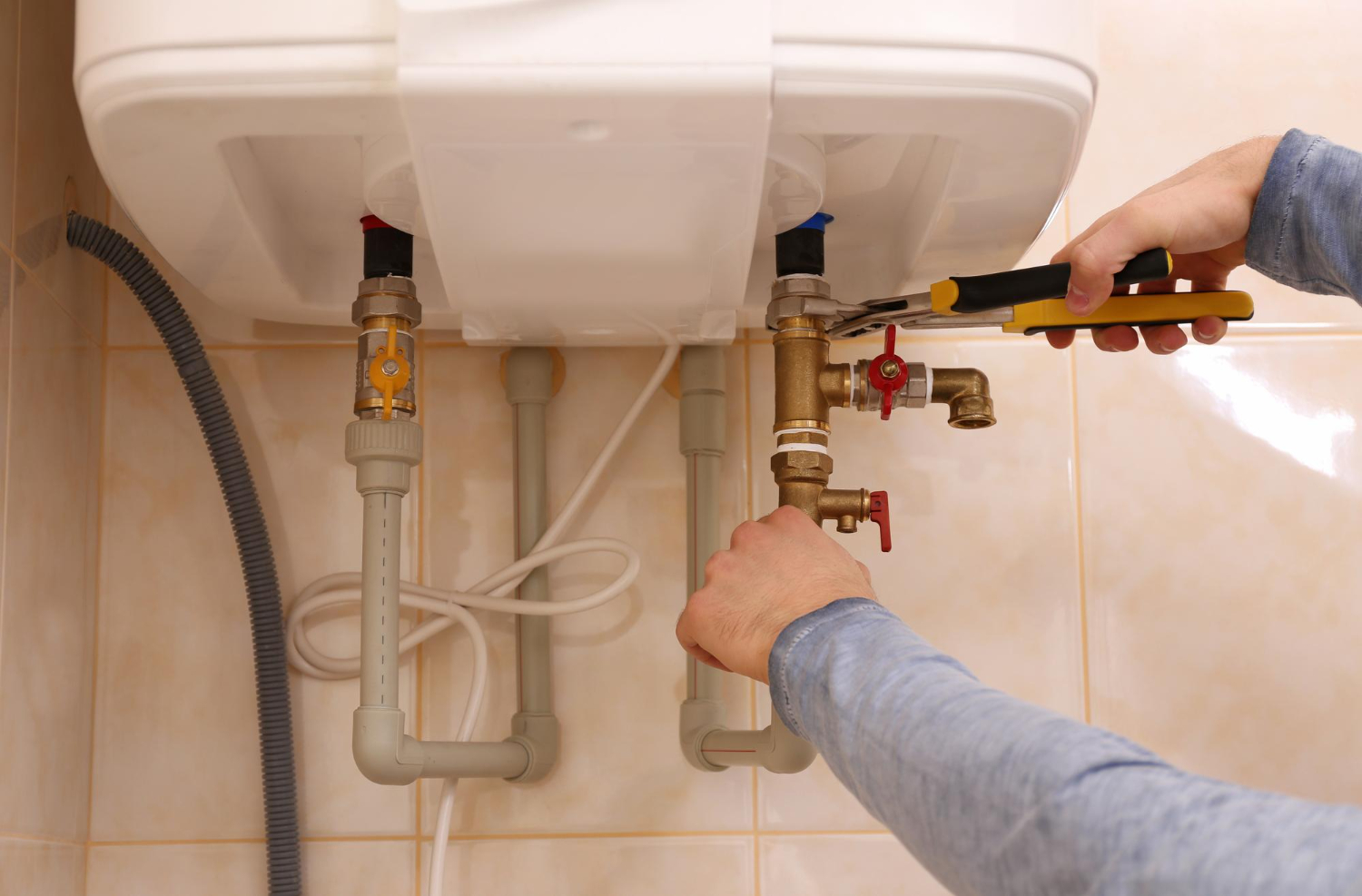
Tankless hot water heater repair in North Pole comes up more often than most homeowners expect, and the problems rarely announce themselves cleanly. A unit losing ground to scale, running lean on gas pressure, or dealing with a failing sensor will often keep producing hot water in a degraded state for weeks before it trips a fault code or stops altogether. By the time the shower goes cold, the underlying condition has usually been developing for a while.
In this article, you'll learn how to recognize early warning signs before they become full failures, why North Pole's winter conditions make tankless units work harder than the spec sheet assumes, how internal degradation happens without visible symptoms, and how a qualified technician evaluates whether repair is the right call or whether a broader conversation about the unit's future is warranted.
Let's break down the key points you should consider.
- The shower turning cold is not always the first warning
- Winter demand exposes problems the heater hid all summer
- A tankless unit can look fine while losing efficiency
- Repair makes sense when the problem is isolated
Keep reading to understand how tankless systems fail in Alaskan conditions, what each symptom actually points to, and why catching problems early almost always costs less than letting them run.
Tankless hot water heater repair refers to the diagnosis and correction of component-level failures in on-demand water heating systems, including ignition assemblies, flow sensors, gas valves, and heat exchangers, as distinct from full unit replacement.
The shower turning cold is not always the first warning
Most homeowners treat loss of hot water as the event that triggers a service call. In reality, the unit usually signals its struggles well before that point through subtler symptoms that are easy to dismiss.
Error codes often show up after the heater has been struggling for weeks
Modern tankless water heaters from manufacturers including Rinnai, Navien, Noritz, and Bradford White use onboard diagnostic systems that log fault codes when a measured parameter falls outside its operating range. A flow sensor reading below the activation threshold, a flame rod that is not confirming ignition cleanly, or a heat exchanger outlet temperature that exceeds the safety setpoint will each generate a specific code rather than simply shutting the unit down silently.
What homeowners often do not realize is that these codes can recur and self-clear over time. A unit that throws a code, resets, and resumes normal function may do so multiple times before the fault becomes persistent. Each self-clearing event is a signal that the underlying condition is getting worse, not better.
Keeping a note of any code displayed, including the sequence it appeared in, is useful information for a technician. Fault code histories on many current units can also be retrieved through the service menu, giving a technician a timeline of how the problem developed rather than just a snapshot of the current state.
Fluctuating water temperature can point to flow, scale, or ignition trouble
Inconsistent outlet temperature — water that shifts between hot, warm, and cold within a single shower — is one of the most frequently reported symptoms before a formal repair call. It can have several distinct causes that require different corrections.
The flow sensor activates the burner when water velocity crosses a set threshold, typically around 0.5 gallons per minute for residential units. If the sensor is partially obstructed by scale or debris, it may activate and deactivate the burner erratically as flow rate fluctuates, producing the temperature swings residents notice. A fouled inlet screen filter can create similar behavior by restricting incoming flow.
Ignition trouble produces a different pattern. If the igniter is taking multiple attempts to establish a flame, the unit may deliver a burst of cold water before heat transfer begins, followed by expected hot output once ignition is confirmed. Scale on the heat exchanger reduces the rate at which combustion heat transfers to the water, causing the unit to overshoot its modulation range and cycle the burner on and off more frequently than normal.
Waiting for a full shutdown can make a small repair more expensive
A tankless unit that reaches total failure, meaning no ignition, persistent fault lockout, or heat exchanger overheat, typically gets there through a progression of smaller failures. A scale-clogged heat exchanger that is not flushed eventually causes sustained high-temperature cycling, which stresses the copper water channels and can lead to hairline cracks. A flame rod that is not cleaned during annual water heater maintenance gradually develops an oxide layer that increases resistance on the ionization circuit until it stops confirming flame reliably.
Neither of those outcomes is inevitable if the unit is serviced before the degradation becomes structural. A flame rod cleaning is a minor task during a standard service visit. A heat exchanger replacement is a several-hundred-dollar repair that may or may not make financial sense depending on the unit's age. Letting an addressable symptom run until it becomes a component failure is consistently the more expensive path.
Winter demand exposes problems the heater hid all summer
Tankless heaters that perform adequately during mild seasons often reveal their limitations when North Pole winters put sustained, high-demand load on the system.
Longer hot water runs can reveal weak performance fast
During summer or shoulder seasons, hot water usage in most households is moderate and intermittent. Showers are shorter, fewer people are stacking warm-water uses back to back, and the heater gets regular recovery time between demands. Sustained performance problems in the heat exchanger or burner assembly may not be apparent under these conditions.
Winter changes the pattern. Morning routines tend to involve longer, hotter showers. Back-to-back use across multiple family members stresses the unit's ability to maintain output temperature consistently. A heat exchanger operating at 80 percent of its designed thermal efficiency because of scale accumulation may pass unnoticed in summer but fall short of the demand curve in January, producing the lukewarm output that prompts a service call.
The North Pole service area experiences some of the most demanding cold-season conditions for residential water heating equipment in the country, and units that are undersized or past due for service are the ones most likely to fail during the coldest weeks.
Incoming cold water makes the unit work harder than homeowners expect
A natural gas tankless heater produces a fixed maximum BTU output. The temperature rise it can deliver across a given flow rate depends entirely on the difference between the incoming cold water temperature and the desired outlet temperature. In a mild climate, groundwater might enter a home at 55°F. In Interior Alaska, that figure can drop to 34 or 35°F during winter months.
A unit sized to deliver a 70°F temperature rise at 2.5 gallons per minute will struggle to meet that performance when the incoming water is 20 degrees colder than its design assumption. The unit is not failing in a technical sense — it is operating at its rated capacity — but it cannot meet the household's demand at full flow rate under those conditions.
This is a point the U.S. Department of Energy addresses directly: in colder climates, tankless heaters must deliver a larger temperature rise than in warmer regions, which requires higher BTU input or reduced flow rate to maintain the target outlet temperature. A water heater repair technician assessing a complaint like this needs to distinguish between a unit that is malfunctioning and one that was simply undersized for the climate it is operating in.
Gas, venting, and water flow all have to keep up at the same time
Tankless unit performance depends on three simultaneous inputs arriving within specification: adequate gas pressure at the unit's inlet, sufficient combustion air and exhaust clearance through the venting system, and water flow at or above the activation threshold. If any one of these falls short, performance suffers in ways that are easy to misread.
Low gas pressure at the unit manifests as weak flame modulation and underheated output at peak demand. Pressure at the gas meter does not always translate accurately to pressure at the appliance. Undersized distribution piping, a faulty pressure regulator, or a high-draw moment when multiple gas appliances run simultaneously can all drop delivery pressure below what the heater requires.
Venting problems are particularly relevant in cold climates. Condensate can accumulate and partially obstruct the exhaust flue on high-efficiency condensing units, especially in configurations where the exhaust run is long or improperly sloped. The unit's internal pressure switches detect the restriction and reduce burner output or trip a fault code to protect the heat exchanger from overheating.
A tankless unit can look fine while losing efficiency
Visual inspection tells a technician almost nothing about a tankless heater's internal condition. The meaningful degradation happens inside the heat exchanger and across component surfaces that are not accessible without disassembly.
Mineral buildup quietly reduces heat transfer
Scale forms wherever heated water contacts a metal surface and dissolved calcium and magnesium precipitate out of solution. In a tankless water heater, the primary site of scale accumulation is the internal water channels of the heat exchanger, where water temperatures are highest and turbulence encourages mineral deposition.
According to the U.S. Department of Energy, scale accumulation on a water heater's heating surface degrades thermal efficiency and forces the unit to consume more fuel to reach the same output temperature. In a tankless unit, where heat transfer happens across a compact exchanger rather than a large tank, even a thin scale layer has a proportionally greater effect on performance than it would in a conventional storage heater.
Annual descaling, typically performed by circulating a diluted food-grade citric acid solution through the heat exchanger via the flush valve ports, is the standard preventive procedure for units operating in hard water areas. Fairbanks and North Pole water supplies carry moderate to high hardness in many zones, making this service a regular necessity rather than an occasional precaution.
Delayed ignition is not something to ignore
Delayed ignition occurs when the gas-air mixture in the burner assembly does not ignite at the moment the igniter fires, allowing unburned gas to accumulate briefly before combustion begins. When ignition finally occurs, it does so with a small pressure wave, sometimes heard as a soft thump or pop, rather than a clean light-off.
The causes include a fouled igniter electrode, a cracked or contaminated flame rod, a dirty burner surface that disrupts the gas-air mixture, or a gas pressure issue that affects mixture ratio. Any of these conditions means the unit is not achieving clean combustion, which accelerates wear on the burner assembly and heat exchanger and can produce elevated carbon monoxide levels during the incomplete combustion events that precede clean ignition.
Delayed ignition should be diagnosed and corrected as a safety matter, not just an efficiency concern. A technician will inspect the igniter gap, clean or replace the flame rod, verify gas pressure at the manifold, and inspect the burner surface for carbon deposits or physical damage.
Short cycling can wear parts before the homeowner notices a pattern
Short cycling in a tankless heater refers to a condition where the burner fires and extinguishes in rapid succession rather than running through a sustained heating cycle. It is distinct from normal modulation behavior, and it places stress on ignition components, gas valves, and control boards that are designed for a finite number of open-close cycles. The most common causes include:
- Flow rate instability: A partially closed fixture or a flow sensor at the edge of its activation threshold causes the unit to start and stop repeatedly rather than sustain a cycle.
- Recirculation loop misconfiguration: A recirculation pump that keeps the flow sensor active without generating enough demand to sustain a full heating cycle forces the burner to fire in short bursts continuously.
- Temperature overshoot: A scale-coated heat exchanger delivering outlet temperature above the setpoint quickly triggers a high-limit shutoff before the cycle completes, then immediately restarts.
- Venting back-pressure: A restricted exhaust path triggers the combustion air pressure switch, interrupting the cycle before the demand is fully satisfied and forcing an immediate restart attempt.
Identifying the root cause requires a technician to observe the unit operating under normal demand conditions, review the fault log, and check each input system independently.
Repair makes sense when the problem is isolated
Not every service call ends in a repair recommendation. Understanding the decision framework helps homeowners engage productively with the technician rather than simply waiting for a verdict.
Sensors, valves, and ignition parts can fail before the whole unit is done
Tankless water heaters contain a predictable set of components that tend to fail before the rest of the unit reaches end of life. The flame rod and igniter electrode are consumable items in the sense that their functional surfaces degrade with use and exposure to combustion byproducts. The flow sensor contains a small magnetic paddle or turbine that can become fouled or worn. Gas valves contain elastomeric seals that degrade over time. None of these failures condemn the unit.
Replacing a flame rod assembly is a minor repair. Replacing a flow sensor on most residential units involves disconnecting the water inlet, removing the sensor body, and reinstalling the new component. Even a gas valve replacement, which is a more involved procedure requiring gas line work and a combustion verification test afterward, is well within the range of a cost-effective repair on a unit that is otherwise in good condition.
The diagnostic value here is specificity. When a technician identifies a failed flame rod rather than a failed heat exchanger, that specificity changes the repair economics entirely.
Age and maintenance history shape the repair-or-replace conversation
A tankless water heater that has been descaled annually, had its inlet filter cleaned regularly, and had ignition components serviced on schedule can realistically last 15 to 20 years. A unit of the same age that has never been descaled, that has operated in hard water without treatment, and that has accumulated a history of heat exchanger overheat events is in a fundamentally different condition.
According to the U.S. Environmental Protection Agency's ENERGY STAR program, tankless water heaters have a longer expected service life than conventional storage units, but that advantage depends on whether the unit receives the maintenance the manufacturer requires. The repair-or-replace decision framework generally works as follows:
- Identify the failed component and its full replacement cost, including parts and labor together, not parts alone.
- Estimate remaining service life based on maintenance history and current heat exchanger condition, which a technician can assess through visual exhaust inspection and outlet temperature readings under load.
- Compare repair cost against replacement cost as a percentage. A repair that exceeds roughly half the cost of a comparable new unit on a heater already at or past its expected service life is generally not the right call.
- Account for installation-related problems that will recur. If the unit was undersized for the home's demand or incorrectly vented, repair restores it to a baseline that was already inadequate.
A technician can spot installation issues that keep causing repeat calls
Some tankless heaters generate repeat service calls not because the unit is defective but because something about the original installation creates conditions that cause the same component to fail repeatedly. Common installation-related issues that produce recurring problems include:
- Undersized gas supply line: Forces the unit to operate at the edge of its gas pressure specification, stressing the modulating gas valve and producing chronic underperformance at peak demand.
- Improper venting slope: Causes condensate to pool in the exhaust flue on high-efficiency units, leading to recurrent flue restriction faults.
- Missing isolation valves on the flush ports: Makes descaling impractical, so scale accumulates until it causes a heat exchanger fault rather than being addressed preventively.
- Cold water supply line running through an uninsulated chase: Delivers water to the unit colder than the design condition, compounding the performance gap in winter and increasing fuel consumption across every cycle.
- Incorrect recirculation configuration: Causes the unit to activate unnecessarily or prevents the recirculation loop from maintaining temperature without continuous short cycling.
When a homeowner reports the same fault code recurring every few months, those installation factors are where the investigation should start. Replacing the failed component without addressing the root installation condition produces a temporary fix at ongoing cost.
Conclusion
Tankless hot water heater repair in North Pole is most cost-effective when the problem is caught at the component level, before a repairable fault becomes structural damage to the heat exchanger or a chronic pattern that compounds over multiple seasons. The symptoms that precede a full failure, whether fluctuating temperatures, recurring error codes, or audible ignition delay, are meaningful diagnostic signals rather than inconveniences to work around.
Interior Alaska's operating conditions make these units work harder than they do in milder climates. Cold incoming water, high demand during long winters, and the hardness levels present in many North Pole water supplies all accelerate the degradation that annual maintenance is designed to prevent. A unit that gets regular descaling, clean ignition components, and a proper venting check will outlast one that only receives attention when it stops producing hot water.
When something is wrong, the difference between a minor repair and a major one is often a matter of how early the call gets made.
Contact Prospector Plumbing to have a licensed technician diagnose your tankless heater, identify exactly what is causing the problem, and give you an honest assessment of whether repair or replacement is the right move.
Licensed & insured Alaska plumbing and heating. Locally owned and operated! We're the happiest plumbers in Alaska and go the extra mile on every job!
Fairbanks
135 32nd Avenue
Fairbanks AK 99701
North Pole
North Pole, AK 99705
Mat-Su Valley
1712 N Williwaw Way
#1 Wasilla, AK 99654
Eagle River
AK 99577