

Tankless water heater installation in North Pole AK before your old tank decides for you
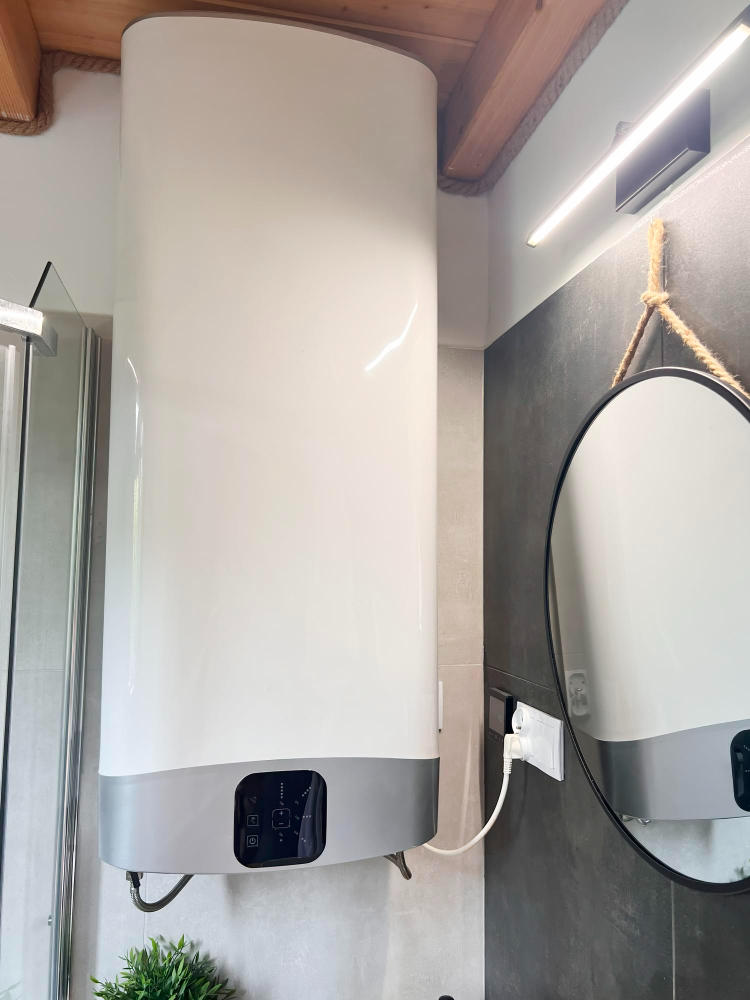
Tankless water heater installation in North Pole AK is a decision most homeowners start thinking about when their existing tank shows signs of age, but the specifics of the job look different here than they do in warmer parts of the country. Incoming water temperatures, gas line capacity, venting requirements, and the role your current tank plays in heating the mechanical space all factor into the installation in ways that matter.
In this article, you will learn what signals indicate your current tank is near the end of its service life, how cold groundwater changes the performance math for every tankless unit, what the gas line and venting work involves before the unit even goes on the wall, how to avoid the most common sizing mistake in cold-climate installations, and why the payback timeline in an Alaska home is not the same number you see quoted nationally.
Let's break down the key points you should consider.
- The tank that made it through last winter may not make it through the next one
- An on demand water heater installation works differently in cold groundwater
- The gas line, the vent, and the space around the unit all affect the install
- Sizing wrong is the most expensive mistake in a cold-climate tankless install
- The payback timeline looks different when your old tank was heating the room too
Keep reading to understand what a tankless switch actually involves in a North Pole home so you can make the decision before your old unit makes it for you.
The tank that made it through last winter may not make it through the next one
A tank water heater that is still producing hot water is not necessarily a tank water heater that is safe to rely on for another season. The signs of approaching failure are specific, and in North Pole they develop faster than the manufacturer's rated lifespan suggests.
Rust at the base and inconsistent temperatures point to different problems
Rust forming around the base of a tank water heater usually indicates that the internal anode rod has been fully consumed and the tank lining is corroding from the inside. This is a structural issue. Once the steel tank begins rusting through, a leak or a full rupture is a matter of time, not possibility.
Inconsistent water temperature, on the other hand, points to a failing heating element on an electric unit or a deteriorating thermocouple and burner assembly on a gas unit. These are functional problems that can sometimes be repaired.
The distinction matters because rust at the base typically means the tank needs to be replaced, while temperature inconsistency may allow for a component-level water heater repair. A plumber can determine which situation applies and whether repair or replacement makes more financial sense given the age of the unit.
How to tell which problem you are dealing with:
- Visible rust or orange-colored water pooling at the base of the tank indicates internal corrosion that cannot be reversed
- Fluctuating temperatures during a single shower that shift from hot to lukewarm and back suggest a heating element or gas valve issue
- A popping or rumbling sound from the tank during heating cycles means sediment has built up at the bottom, insulating the water from the heat source and forcing the unit to work harder
- A metallic or sulfur smell in the hot water but not the cold water points to anode rod failure or bacterial growth inside the tank
A ten-year-old unit in North Pole works harder than the same unit in the lower 48
Manufacturer lifespan ratings for tank water heaters are based on standard test conditions that do not reflect the operating environment in Interior Alaska. A unit rated for twelve years of service assumes moderate incoming water temperatures, reasonable sediment levels, and consistent utility conditions.
In North Pole, the incoming water temperature can drop below 40 degrees for much of the year, which means the unit works harder on every heating cycle to reach the set point. Harder work means more thermal cycling on the tank walls, faster sediment accumulation, and accelerated wear on heating elements and burner components.
A unit that might last twelve years in a temperate climate often shows meaningful degradation by year eight or nine in North Pole. Regular water heater maintenance extends the usable life, but it does not eliminate the additional stress that cold groundwater places on the system every day of the year.
Replacing in summer avoids an emergency call when it fails in January
Tank water heaters rarely fail at convenient times. In North Pole, a mid-winter failure means no hot water in a home where indoor temperatures depend on every system running correctly, and it means scheduling an emergency service call during the busiest season for heating repair providers.
A planned replacement during summer gives the homeowner control over the timeline, the product selection, and the installation schedule. It also allows time for the gas line evaluation, venting modifications, and permit coordination that a tankless water heater installation requires.
Emergency replacements compress all of that into a crisis timeline, which limits options and increases cost. The homeowner who replaces proactively chooses the unit, the installer, and the schedule. The homeowner who waits for failure gets whatever is available that week.
- Summer installations allow the plumber to work without competing with heating emergencies across the service area
- Product availability is better during the off-season, which means more options for sizing, brand, and efficiency rating
- The gas line and venting work can be completed without the urgency of a household that currently has no hot water
- Any permitting or inspection requirements can be handled on a normal timeline rather than expedited at additional cost
An on demand water heater installation works differently in cold groundwater
The performance specifications printed on a tankless water heater are calculated under conditions that do not exist in North Pole for most of the year. Understanding how cold inlet water changes the math is essential before selecting a unit.
Water enters at 35 to 40 degrees here, and that changes the math on every unit
Tankless water heaters are rated by their ability to raise water temperature by a certain number of degrees at a given flow rate, measured in gallons per minute. Most manufacturer specifications assume an incoming water temperature of around 57 degrees, which is the national groundwater average.
In North Pole, incoming water temperatures run between 35 and 40 degrees for the majority of the year, and can dip lower during the coldest months. That means the unit has to produce a temperature rise of 75 to 85 degrees to deliver water at 120 degrees, compared to the 63-degree rise assumed in the rated specifications.
This single variable changes the real-world performance of every tankless unit sold. A unit rated to deliver 9.5 gallons per minute at a 57-degree inlet will deliver significantly less at a 37-degree inlet. Any on demand water heater installation in North Pole must account for this difference at the sizing stage, not after the unit is on the wall.
The flow rate on the box drops by half when temperature rise doubles
The relationship between temperature rise and flow rate is inverse. As the required temperature rise increases, the maximum flow rate the unit can deliver decreases proportionally.
A condensing gas tankless unit rated at 9.5 GPM with a 57-degree rise may only produce 4.5 to 5 GPM when the required rise jumps to 80 or 85 degrees. That is the difference between running two showers and a dishwasher simultaneously and barely keeping up with one shower and a kitchen faucet.
This is not a defect in the unit. It is the physics of heating water. The burner can only transfer a fixed number of BTUs per minute, and colder inlet water demands more energy per gallon to reach the same output temperature.
What the flow rate reduction looks like in practice:
- At 57-degree inlet (national average), a high-output unit delivers around 9 to 10 GPM, enough for three to four simultaneous fixtures
- At 45-degree inlet (mild Interior Alaska conditions), the same unit delivers roughly 6 to 7 GPM, handling two fixtures comfortably
- At 37-degree inlet (typical North Pole winter), output drops to 4.5 to 5.5 GPM, limiting simultaneous use to one or two fixtures
- At 33-degree inlet (deep winter lows), the unit may produce under 4 GPM, which can fall short of even a single high-flow showerhead
Electric tankless rarely keeps up in a North Pole home during winter
Electric tankless water heaters are popular in mild climates where the required temperature rise is modest and electrical service can support the load. In North Pole, both of those conditions work against the electric option.
An electric tankless unit sized to deliver a meaningful flow rate at an 80-degree temperature rise requires 150 to 200 amps of dedicated electrical capacity. Most residential electrical panels in North Pole were not designed to support that load on top of existing circuits for heating, lighting, and appliances.
Beyond the electrical infrastructure issue, the heating capacity of electric elements is lower per unit of energy input than a gas burner. A gas condensing tankless unit can deliver 199,000 BTUs per hour from a single wall-mounted unit. Achieving equivalent output from electric resistance heating requires substantially more electrical draw, which increases operating costs and may require a panel upgrade that adds thousands of dollars to the installation.
For most North Pole homes, a gas-fired condensing tankless unit is the practical choice for cold-climate performance. Electric models may work for single-point-of-use applications, such as a handwashing sink in a shop or a bathroom that is far from the main water heater, but they are rarely suited to whole-house duty in this climate.
The gas line, the vent, and the space around the unit all affect the install
A tankless water heater installation in North Pole is not a one-for-one swap. The gas supply, the exhaust venting, and the physical installation space all require evaluation and often modification before the unit can be installed and fired.
Most older homes need the gas line upsized before a tankless unit will fire properly
A standard 40- or 50-gallon tank water heater typically draws between 30,000 and 50,000 BTUs per hour. A high-output condensing tankless unit draws between 150,000 and 199,000 BTUs per hour. The gas line that adequately supplied the old tank may not deliver enough volume to fire the new unit at full capacity.
Undersized gas supply is one of the most common issues that delays or complicates a tankless installation in older North Pole homes. The existing half-inch gas line that runs from the meter to the mechanical room may need to be upsized to three-quarter inch or larger, depending on the total run length and the combined BTU demand of all gas appliances in the home.
A tankless water heater plumber evaluates the gas line size, the meter capacity, the total connected load, and the distance from the meter to the unit before confirming that the installation can proceed. This step is not optional. A unit that fires on an undersized gas line will produce error codes, deliver inconsistent temperatures, and may shut down entirely under high demand.
Old tank venting cannot be reused and the new run has to clear the snow line
Conventional tank water heaters use a natural-draft B-vent that relies on hot exhaust rising vertically through a metal flue pipe to the roofline. Tankless units require a sealed, direct-vent system that uses a powered fan to push exhaust through stainless steel or polypropylene vent pipe, typically out through an exterior wall rather than the roof.
The existing B-vent cannot be reused. The materials, the diameter, and the draft method are incompatible with a power-vented or direct-vent tankless unit. New vent pipe must be installed, and in North Pole, the termination point on the exterior wall must be positioned above the expected snow line.
If the vent termination sits too low, snow accumulation can block the exhaust outlet and trigger a safety shutdown. The plumber determines the correct termination height based on local snowfall patterns, roof overhang dimensions, and the manufacturer's clearance specifications. This is a code and safety requirement under the International Fuel Gas Code, not an optional detail.
A tankless water heater plumber checks clearance, combustion air, and drainage first
Before the unit goes on the wall, the plumber evaluates the installation space for three things that the homeowner may not have considered.
First, clearance. Tankless units require specific distances from combustible materials on all sides, and the manufacturer's installation manual defines those clearances precisely. A utility closet that comfortably housed a tank may not meet the clearance requirements for a wall-mounted tankless unit.
Second, combustion air. A sealed-combustion tankless unit draws air from outside through a dedicated intake pipe, but the room still needs adequate ventilation for safe operation and maintenance access. Building code requirements under the International Fuel Gas Code define minimum combustion air provisions based on the BTU rating of the appliance.
Third, condensate drainage. Condensing tankless units produce acidic condensate that must be routed to a drain. In North Pole, where the condensate line may pass through unheated space on its way to a drain, freeze protection for the condensate line is part of the installation scope.
- Clearance from combustibles must meet the manufacturer's specification, which varies by model and typically ranges from one to twelve inches on each side
- Combustion air intake piping must be routed to the exterior and positioned to avoid drawing in exhaust, snow, or debris
- Condensate drain lines require a trap and, in cold climates, insulation or heat trace to prevent freezing between the unit and the drain connection
- Electrical supply for the unit's control board and fan requires a dedicated circuit, even on a gas-fired model
Sizing wrong is the most expensive mistake in a cold-climate tankless install
An undersized tankless unit delivers lukewarm water and frustration. An oversized unit wastes money on capacity that never gets used. In North Pole, the margin for error is smaller because cold inlet water narrows the performance window.
A unit rated for two showers in Texas may handle one shower here
Manufacturer literature and retail displays often advertise tankless units by the number of simultaneous fixtures they can serve. Those claims are based on the national average inlet temperature, not on North Pole conditions.
A mid-range gas tankless unit rated to handle two showers and a sink simultaneously at a 57-degree inlet may only handle a single shower at a 37-degree inlet. The BTU output of the unit has not changed. The demand placed on it by colder water has increased to the point where the rated performance no longer applies.
This is why selecting a tankless unit based on fixture count alone is unreliable in Interior Alaska. The correct sizing method uses the actual inlet water temperature, the desired output temperature, and the combined flow rate of all fixtures that may run simultaneously during peak demand.
Household demand during morning routines determines the minimum capacity
The peak hot water demand in most North Pole homes occurs during the morning routine, when showers, faucets, and sometimes a dishwasher or washing machine are running within the same window.
A sizing calculation starts with identifying every fixture that may draw hot water at the same time and adding their flow rates together. A standard showerhead flows at 2.0 to 2.5 GPM. A kitchen faucet flows at 1.5 to 2.0 GPM. A dishwasher draws approximately 1.5 GPM during its fill cycle.
If two showers and a kitchen faucet run simultaneously, the system needs to deliver 5.5 to 7.0 GPM at a temperature rise of 80 degrees or more. That requires a high-output condensing gas unit in the 180,000 to 199,000 BTU range. Selecting a unit with less capacity than this peak scenario demands will result in temperature drops during simultaneous use. According to the U.S. Department of Energy, demand-type water heaters should be sized based on flow rate and temperature rise to ensure adequate hot water delivery at peak usage.
An energy efficient water heater only saves money when it matches the load
A condensing tankless water heater with a 0.95 or higher Uniform Energy Factor is one of the most energy efficient water heater options available for residential use. But efficiency only translates to savings when the unit is correctly matched to the household's actual demand.
An oversized unit that fires at maximum capacity to serve a low-demand household cycles on and off more frequently, which reduces the efficiency advantage. An undersized unit that cannot meet peak demand forces occupants to stagger their hot water use, which eliminates the convenience benefit.
The right unit fires at modulating capacity to match the demand in real time. High-quality condensing gas units modulate their burner output from a low fire of around 15,000 to 18,000 BTUs up to a maximum of 199,000 BTUs, adjusting continuously to match the flow rate and temperature demand. This modulation is what delivers the efficiency rating printed on the specification sheet.
- A correctly sized unit runs at partial capacity during low-demand periods, using only the gas needed to maintain the set temperature at the actual flow rate
- During peak demand, the unit ramps to full output and delivers the rated performance without temperature fluctuation
- An undersized unit running at maximum output continuously cannot modulate and loses the efficiency benefit of variable-fire technology
- An oversized unit cycling on and off during low-flow calls produces temperature fluctuations known as the "cold water sandwich" effect, which is both a comfort issue and an efficiency loss
The payback timeline looks different when your old tank was heating the room too
The energy savings from a tankless water heater are well documented, but the payback calculation in a North Pole home includes a variable that most national estimates do not account for. The old tank was putting heat into the room it occupied, and removing it changes the thermal balance of that space.
Standby losses from a tank partly offset heating costs in an Alaska home
A conventional tank water heater loses heat through its walls continuously, even when no hot water is being drawn. This is called standby loss, and in a temperate climate it is pure waste. The energy used to keep 40 or 50 gallons of water hot around the clock has no secondary benefit.
In a North Pole home, that standby heat loss warms the mechanical room, the utility closet, or the basement where the tank sits. During winter, that incidental heat contributes to maintaining above-freezing temperatures in the space, which helps protect nearby plumbing and reduces the load on the primary heating system by a small but real amount.
When the tank is removed and replaced with a tankless unit that produces no standby heat, the mechanical space gets colder. The primary heating system picks up the difference, or the homeowner adds supplemental heat to prevent freeze risk in the space. This offset does not eliminate the savings from going tankless, but it does reduce the net savings compared to the numbers published for homes in milder climates.
Tankless energy savings are real but take longer to show in a heating-dominant climate
The U.S. Department of Energy estimates that tankless water heaters can be 24 to 34 percent more energy efficient than conventional storage tank models for homes that use 41 gallons or less of hot water daily, and 8 to 14 percent more efficient for homes using around 86 gallons daily.
Those savings are based on the energy used to heat water specifically. In a North Pole home where the heating season runs eight months or more, water heating represents a smaller share of total energy costs than it does in a home where heating is only needed four or five months a year.
The absolute savings in dollars are real, but they represent a smaller percentage of the total utility bill. This means the payback period on the upfront cost of the tankless installation is longer in a heating-dominant climate than the five-to-eight-year estimate commonly cited in national publications. Homeowners who factor this into their decision make a more informed choice.
Factors that extend or shorten the payback timeline in North Pole:
- Higher daily hot water usage accelerates the payback because the efficiency advantage applies to more gallons per day
- Lower natural gas prices slow the payback because the dollar value of each saved BTU is smaller
- A home with a boiler or furnace that already heats the mechanical space sees less thermal offset when the tank is removed
- A home where the old tank sat in an uninsulated space and provided meaningful freeze protection may need supplemental heat after the switch, which partially offsets the savings
A tankless water heater replacement pays back faster when the old unit was already failing
The payback calculation changes substantially when the comparison is not "tankless versus a new tank" but "tankless versus an old tank that is about to fail." A tank water heater in its final years of service operates at reduced efficiency because sediment buildup insulates the water from the heat source, corroded components increase energy consumption, and more frequent recovery cycles drive up gas usage.
Replacing a failing unit with a new condensing tankless model produces a larger efficiency gap than replacing a new tank with a tankless. The old unit may be operating at 50 to 55 percent thermal efficiency, while a new condensing tankless operates above 90 percent. That gap narrows the payback period significantly.
Homeowners who are already facing the cost of a tank replacement are comparing the incremental cost of going tankless, not the full installed price against zero. The difference between a new tank installation and a tankless installation, after accounting for the gas line and venting work, is often smaller than expected when the old unit needs replacing regardless.
A planned tankless water heater replacement during the summer, before the old tank fails during the heating season, gives the homeowner the best combination of product selection, installation quality, and long-term operating cost.
Conclusion
A tankless water heater installation in North Pole AK involves more planning, more site preparation, and more climate-specific calculation than the same job in a milder part of the country. The gas line, the venting, the inlet water temperature, and the sizing all require adjustments that reflect what it actually takes to heat water reliably when groundwater arrives near freezing for most of the year.
The savings are real, the technology is proven, and the comfort improvement over a failing tank is immediate. But those outcomes depend entirely on getting the installation details right the first time. A unit that is correctly sized for North Pole conditions, installed on an adequate gas supply, vented above the snow line, and matched to the household's peak demand will perform as expected for years.
The homeowners who get the most value from the switch are the ones who make the decision before the old tank makes it for them. If your current water heater is showing signs of age or your energy costs are climbing without explanation, contact Prospector Plumbing & Heating to schedule a tankless water heater evaluation and find out what the installation involves for your home.
Licensed & insured Alaska plumbing and heating. Locally owned and operated! We're the happiest plumbers in Alaska and go the extra mile on every job!
Fairbanks
135 32nd Avenue
Fairbanks AK 99701
North Pole
North Pole, AK 99705
Mat-Su Valley
1712 N Williwaw Way
#1 Wasilla, AK 99654
Eagle River
AK 99577