

How whole home water filtration installation helps Fairbanks homes
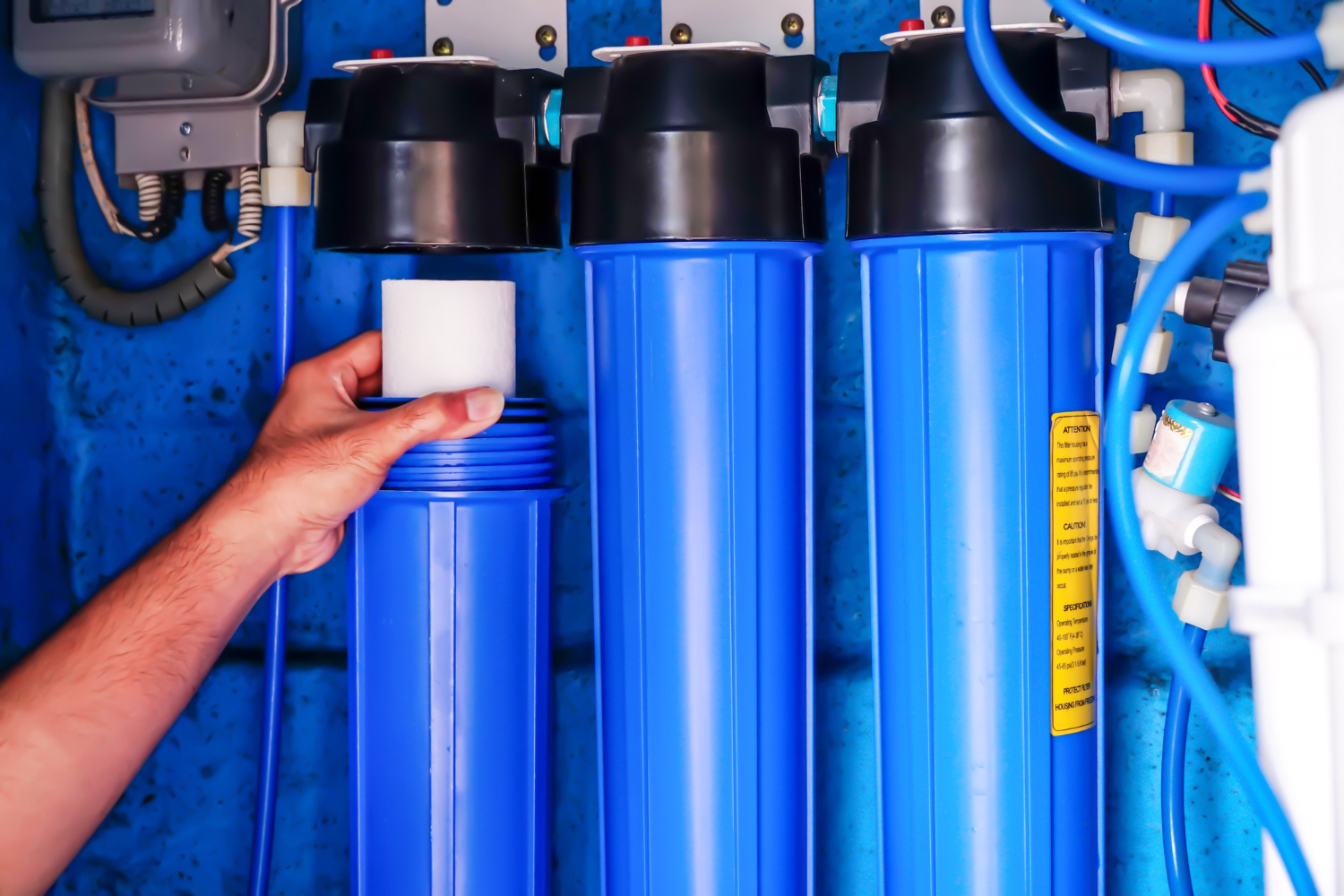
Whole home water filtration installation addresses water quality at the point of entry, treating every gallon that enters the house before it reaches a single faucet, fixture, or appliance. For Fairbanks homeowners, that matters more than in most places. Interior Alaska water, whether drawn from the municipal system or a private well, frequently carries elevated sediment loads, dissolved iron, hardness minerals, and in some areas hydrogen sulfide, all of which affect daily use across the entire home, not just the kitchen tap.
In this article, you'll learn why whole-house filtration works differently from under-sink or pitcher systems, how Fairbanks-specific conditions like extreme cold and tight utility spaces affect installation decisions, why the right filter media depends entirely on what your water actually contains, and what separates a well-executed installation from one that causes problems later.
Below, we'll walk through each important aspect.
- Your water problem rarely starts at the kitchen sink
- Cold-climate plumbing changes the way filtration should be installed
- The filter you buy at the store may not match what is in your water
- Installation is where long-term water quality is won or lost
Keep reading to understand exactly how the right whole-house filtration system is specified, placed, and installed in an Alaskan home, and why each decision has a direct effect on how long it works and how well.
Your water problem rarely starts at the kitchen sink
Water quality issues that surface at one fixture almost always exist throughout the plumbing. What changes from room to room is where the effects are most visible.
The stains, smells, and gritty residue showing up in more than one room
Reddish-brown staining on a toilet bowl or around a tub drain is one of the most recognizable signs of dissolved iron in a home's water supply. When iron oxidizes on contact with air or chlorine, it leaves ferric deposits on any surface it touches repeatedly. At concentrations above 0.3 milligrams per liter, the U.S. Geological Survey notes that iron staining becomes visually apparent on plumbing fixtures and laundry — and many Fairbanks-area groundwater sources exceed that threshold considerably.
Sulfur odor, often described as a rotten egg smell, is caused by hydrogen sulfide, a naturally occurring gas in certain groundwater formations common across Interior Alaska. It tends to be detectable throughout the home because it releases wherever water is running, not just at one tap.
Sediment — visible particles or grit in the water — indicates suspended solids making it past the source or distribution system. In homes on private wells, sediment levels can fluctuate with seasonal changes in the water table. In either case, the particles travel with the water to every fixture, every appliance, and every ice maker in the house.
When bottled water does not fix what your appliances are still dealing with
A common interim response to water quality concerns is to stop drinking tap water and rely on bottled water or a refrigerator filter. That approach addresses taste and odor at one point of use, but it does nothing for the water flowing into the dishwasher, the washing machine, the water heater, or the water softener installation that may already be in place.
Hard water — water with elevated calcium and magnesium content — causes scale buildup inside pipes, on heating elements, and in the tanks of water heaters and boilers. According to the U.S. Department of Energy, scale accumulation on a water heater's heating element reduces efficiency measurably, forcing the unit to consume more energy to reach the same output temperature. In a climate where heating costs are already significant, that inefficiency compounds quickly.
Sediment and iron particles also wear down fixture internals over time. Ceramic disc valves in modern faucets, ballcock seals in toilets, and solenoid valves in appliances are all vulnerable to abrasive particles circulating through unfiltered water.
The difference between one filtered tap and treating the whole supply
Point-of-use filters, whether installed under a sink or built into a refrigerator, are designed to treat a small fraction of a home's total water volume. They use finer filtration media, often including activated carbon or reverse osmosis membranes, and they perform well for drinking and cooking water. But their flow rates are too low and their housings too small to handle whole-home demand.
Point-of-entry systems, by contrast, are installed on the main supply line and sized to deliver treated water at full household flow rates. A properly sized whole-house sediment filter, for example, might handle 15 to 20 gallons per minute without a meaningful pressure drop: something no under-sink unit is designed to do.
The practical result is that every shower, every load of laundry, and every cycle through the dishwasher uses treated water. That changes the outcome for appliance longevity, fixture appearance, and the performance of any softening or conditioning equipment installed downstream.
Cold-climate plumbing changes the way filtration should be installed
Fairbanks presents installation conditions that differ substantially from the lower 48. Temperature extremes, compact mechanical rooms, and the realities of Alaskan home construction all affect where equipment should go and how it should be accessed.
Equipment placement matters when utility spaces get tight or cold
In many Fairbanks homes, the main water supply enters the structure through a utility space, often a mechanical room, a crawl space, or an area adjacent to the boiler. These spaces are heated, but they are frequently small and already occupied by a boiler, water heater, pressure tank, and associated piping.
Filter housings installed on the main line need enough clearance to allow the housing bowl to be removed vertically for cartridge changes. A standard 10-inch or 20-inch Big Blue housing requires roughly 12 to 24 inches of unobstructed vertical clearance below the housing head. In tight mechanical rooms, that clearance needs to be confirmed before any equipment is specified.
Temperature is a separate consideration for homes where the supply line passes through an unheated garage or an unconditioned chase before entering the mechanical space. Filter housings are not rated for freezing conditions, and placing one in a space that drops below 32°F will crack the housing and flood the area. The correct installation position is always in a consistently heated, accessible space.
Filter changes become harder when the system is installed in the wrong spot
Even a well-chosen filter media will fail to perform if the homeowner cannot realistically change the cartridge on schedule. Sediment pre-filters on most residential systems need to be changed every three to six months depending on the incoming load. A housing installed directly behind a water heater with six inches of clearance, or positioned near the floor with no shut-off immediately upstream, makes that task unnecessarily difficult.
Good installation practice positions the filter housing:
- At a working height between 36 and 54 inches from the floor
- With a dedicated isolation valve upstream so the system can be depressurized without shutting off the entire house
- With a pressure relief or drain valve to release water from the housing before the bowl is removed
- Within clear reach and without requiring the removal of other equipment to access
When these conditions are not met, filter changes get skipped. Skipped filter changes allow a loaded cartridge to restrict flow, harbor bacterial growth, or bypass media as channeling develops through the compressed sediment cake.
Pressure drops can turn a good filter into a daily frustration
Every filter housing adds resistance to the supply line. A clean, properly sized cartridge creates a manageable pressure drop: typically two to five pounds per square inch (psi) across the housing at normal flow rates. As the cartridge loads with sediment, that pressure drop increases.
In a home where incoming pressure is already on the lower end, say, 45 to 55 psi, an overloaded cartridge can reduce pressure to the point where showers lose force, appliances run sluggishly, and water line performance becomes a daily complaint. The solution is a combination of correct cartridge sizing, realistic change intervals based on actual water quality, and a differential pressure gauge or indicator on the housing so residents know when to replace the cartridge rather than guessing.
Whole-house systems serving homes with well pumps also need to account for pump output pressure and tank pre-charge settings. A filter installed downstream of an undersized pressure tank can cause the pump to short-cycle more frequently if the cartridge restriction is significant enough to trigger the pressure switch prematurely.
The filter you buy at the store may not match what is in your water
Filter media is not interchangeable. The right cartridge or system configuration depends entirely on what contaminants are present, at what concentrations, and in what combinations.
Sediment, minerals, iron, and odor need different treatment paths
A spun polypropylene sediment cartridge rated at 5 or 10 microns removes suspended particles effectively. It does not remove dissolved iron, and it does not address hardness minerals or hydrogen sulfide. Trying to use a sediment filter to address iron will simply cause the cartridge to load rapidly with oxidized particles while dissolved ferrous iron passes through unchanged.
The correct treatment paths for common Fairbanks water issues follow distinct sequences:
- Sediment (suspended particles): Sediment pre-filter, typically 5–25 micron, installed first in the treatment train
- Dissolved iron (ferrous): Oxidizing filter media such as manganese greensand or catalytic carbon, or a chemical feed system paired with a sediment filter
- Ferric iron (already oxidized, particulate): Sediment filtration at an appropriate micron rating, often preceded by an aeration stage
- Hardness minerals (calcium and magnesium): Ion exchange water softener installed downstream of any iron treatment, since iron will foul softener resin rapidly if not addressed first
- Hydrogen sulfide: Activated carbon, oxidizing media, or aeration depending on concentration levels
- Taste and odor: Activated carbon block or granular activated carbon (GAC) as a final stage
Stacking these incorrectly, or skipping stages, produces a system that either fails quickly or does not treat the actual problem.
Oversizing and undersizing both create problems homeowners notice later
Filter and softener sizing is based on daily water demand and peak flow rate. Undersizing a filter housing means the cartridge loads faster than intended, pressure drop builds prematurely, and change intervals become too frequent to be practical. Undersizing a softener resin tank means the resin exhausts before completing its regeneration cycle, and hardness passes through to the distribution system.
Oversizing creates a different problem. A softener tank sized for a large commercial application installed in a small household will take too long to exhaust the resin before regeneration is triggered, allowing channeling to develop through the resin bed and reducing contact time between the water and the exchange media. Oversized GAC tanks can develop bacterial biofilm if contact time is too long and flow is intermittent.
The correct approach sizes each component to the home's actual flow demand, measured in gallons per minute at peak usage, and to the hardness or contaminant load expressed in grains per gallon or milligrams per liter from a water test.
Water testing keeps the system from becoming an expensive guess
No filtration system should be specified without a water test. A basic water quality analysis from a state-certified laboratory will report pH, hardness, iron (total, ferrous, and ferric), turbidity, total dissolved solids (TDS), coliform bacteria, and in many cases hydrogen sulfide and nitrates. According to the U.S. Environmental Protection Agency, homeowners on private wells should test their water at minimum once a year, with additional testing any time water appearance, odor, or taste changes.
For homes on Fairbanks municipal water, the city publishes annual water quality reports under the Safe Drinking Water Act. Those reports provide a useful baseline, but they measure water quality at the distribution point, not at your tap. Pipe age, service line material, and in-home conditions can all introduce variables that do not appear in the municipal report.
Testing before installation is the only way to confirm which contaminants are present and at what levels. It also provides a post-installation baseline for verifying that the system is performing as designed.
Installation is where long-term water quality is won or lost
A correctly specified filtration system installed carelessly will underperform and create problems. The quality of the physical installation determines how the system behaves over years of service, not just on day one.
Bypasses, shutoffs, and drains make maintenance easier later
Every whole-house filtration system should be installed with a three-valve bypass arrangement: an isolation valve on the inlet side, an isolation valve on the outlet side, and a bypass valve connecting the two. This configuration allows the filter assembly to be taken offline for maintenance without cutting water to the rest of the house.
A floor drain or a designated drain line within reach of the housing is equally important. Removing a loaded sediment cartridge from a 20-inch housing releases a significant volume of turbid water. Without a drain point nearby, that water goes on the floor.
These are not optional add-ons. A filter housing installed without upstream and downstream isolation valves cannot be serviced safely in a pressurized system. Field experience consistently shows that installations lacking proper bypasses lead to deferred maintenance — homeowners who cannot easily shut off flow to the filter simply avoid changing the cartridge.
Poor fittings can create leaks in a system meant to prevent damage
Filter housings operating under typical residential line pressure (60 to 80 psi) apply significant and continuous stress to every fitting in the assembly. Compression fittings made from plastic or low-grade brass, overtightened threaded connections, and PTFE tape applied incorrectly to NPT threads are all common sources of slow leaks that may not appear immediately but develop within months of installation.
Standard practice in a permanent residential installation calls for:
- Dielectric unions where dissimilar metals connect (copper to galvanized, for example)
- Full-port ball valves rated for the working pressure of the system
- Properly seated O-rings in all filter housing heads, replaced at every cartridge change
- Brass or stainless fittings at the housing connections rather than plastic quick-connects
- Shutoff confirmation with a pressure gauge before finalizing the installation
The same attention to fitting quality applies downstream, where the treated water supply connects to a water heater installation or any other downstream plumbing component. Leaks in a mechanical room may go unnoticed for extended periods in an Alaskan home where utility spaces are not visited daily.
A clean setup protects fixtures, heaters, and everyday water use
The end goal of the installation is not just a functioning filter. It is a system that delivers measurably better water to every fixture and appliance in the home, consistently, for years. That outcome depends on a clean, properly supported piping layout, correctly torqued housing heads, filter media matched to the water chemistry on file, and a bypass configuration that makes annual service a 10-minute task rather than a project.
When those conditions are met, the downstream benefits are concrete. Water heaters and boilers accumulate scale more slowly, extending service life and maintaining thermal efficiency. Fixtures stay cleaner longer. Softener resin, if present, lasts its full rated service life instead of fouling prematurely from iron loading. According to the U.S. Department of Energy, reducing scale accumulation in a water heater's tank or on a tankless unit's heat exchanger directly preserves energy efficiency over the appliance's operating life.
Proper installation also leaves a clear, labeled, accessible system that any licensed plumber can service in the future without guesswork. Labeled bypass valves, documented filter media specifications posted near the housing, and a noted cartridge change schedule turn a one-time installation into a long-term asset.
Conclusion
Water quality in Fairbanks is not a single-variable problem. The combination of sediment loads, dissolved iron, hardness minerals, and in many cases hydrogen sulfide creates conditions that point-of-use filters cannot adequately address. Whole home water filtration installation works because it intercepts every contaminant before it reaches any fixture, any appliance, or any downstream treatment equipment, not because it solves one isolated symptom.
The decisions that determine whether a system performs over the long term are made before and during installation: understanding what is actually in the water through testing, selecting media that addresses those specific contaminants in the correct sequence, placing equipment where it can be realistically maintained, and executing the physical installation with fittings, bypasses, and shutoffs that hold up under constant system pressure.
In interior Alaska, those details matter more than in milder climates. Utility spaces are tight, access is seasonal in some homes, and the consequences of a leaking fitting or a neglected cartridge compound quickly when the whole system is working harder to begin with.
If you want a system specified and installed correctly from the start, contact Prospector Plumbing to have your water tested and your options assessed by a licensed plumber who knows Fairbanks homes.
Licensed & insured Alaska plumbing and heating. Locally owned and operated! We're the happiest plumbers in Alaska and go the extra mile on every job!
Fairbanks
135 32nd Avenue
Fairbanks AK 99701
North Pole
North Pole, AK 99705
Mat-Su Valley
1712 N Williwaw Way
#1 Wasilla, AK 99654
Eagle River
AK 99577