

Gas line repair services for North Pole homes
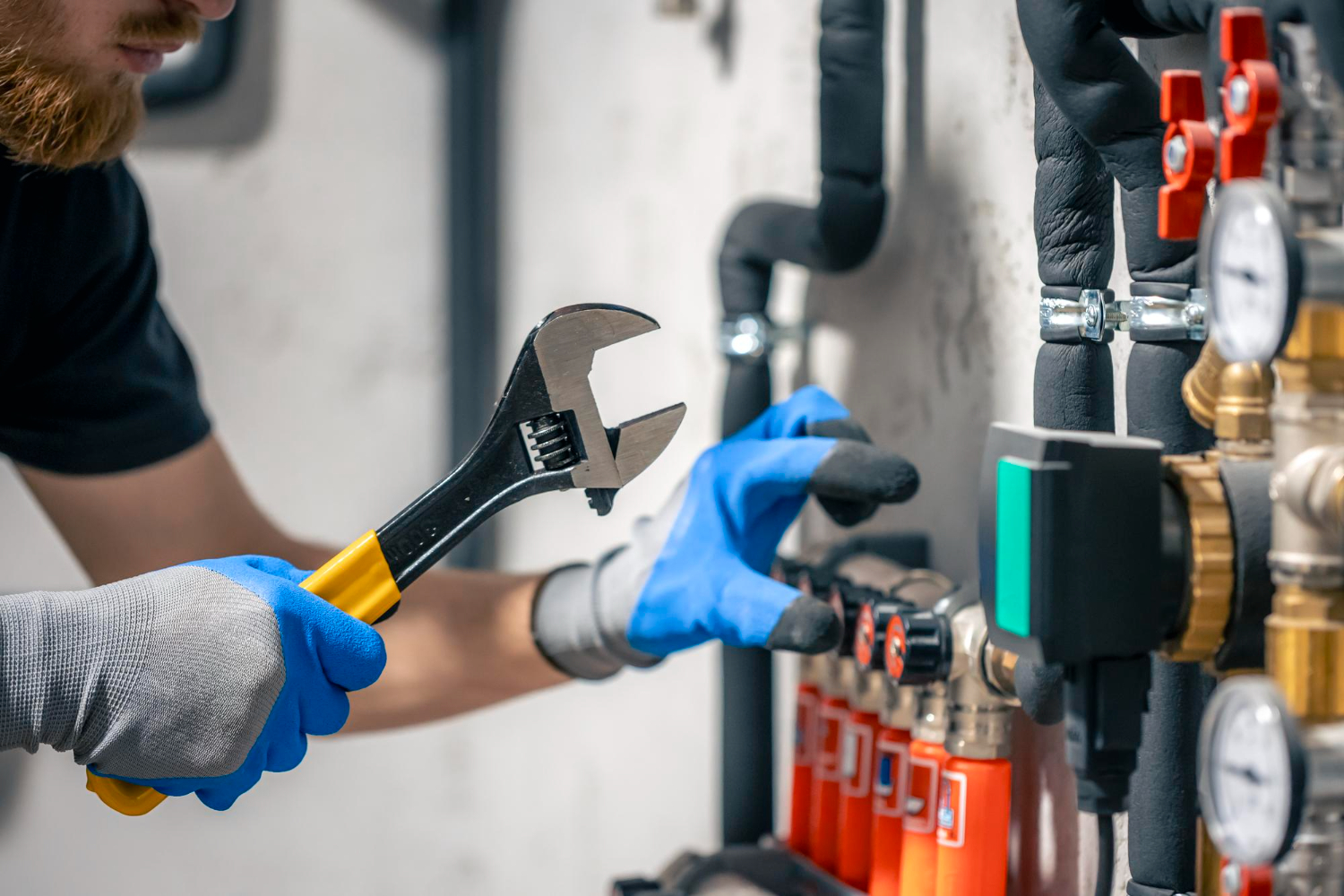
Gas line repair services in North Pole address one of the most consequential categories of residential plumbing work. A failing gas line does not degrade gradually in ways that allow the homeowner to manage the situation over time. It either holds or it does not, and the consequences of a line that does not hold range from appliance malfunction to a safety emergency.
For homes that rely on natural gas or propane for heating, hot water, and cooking, the gas distribution system is critical infrastructure, and problems with it warrant a different level of urgency than most other plumbing concerns.
In this article, you'll learn how to recognize the early and serious warning signs of a gas line problem, how appliance performance issues often connect to the supply line feeding them, how North Pole's heating demands and climate exposure create specific vulnerabilities in residential gas systems, and what a properly executed gas line repair actually involves from a technical and code compliance standpoint.
Here's what you need to know.
- A gas concern is not the time to troubleshoot by smell alone
- Appliance problems can start with the line feeding them
- North Pole homes need gas repairs that account for heating demand
- Safe repair means testing the whole affected section
Keep reading to understand what gas line problems look like at their earliest stages, what a licensed plumber evaluates when responding to a gas concern, and what the repair process should include before a line is returned to service.
A gas concern is not the time to troubleshoot by smell alone
Natural gas and propane are odorized with mercaptan specifically so that leaks can be detected by smell before concentrations reach dangerous levels. The presence of that odor is a warning system, not a measurement tool. A faint smell does not mean a small problem, and a smell that disappears does not mean the problem has resolved.
A faint odor can still point to a serious leak
The concentration of natural gas required to produce a detectable odor is well below the lower explosive limit, which is the concentration at which ignition becomes possible. Mercaptan is detectable at concentrations as low as a few parts per billion, while the lower explosive limit for natural gas is approximately 5 percent by volume in air. That gap exists by design, but it means a smell that seems faint can already represent a release rate that is building toward a dangerous concentration in an enclosed space.
A faint gas odor that appears intermittently, particularly near a specific appliance or in a utility room, should be treated as a confirmed leak until testing proves otherwise. The intermittent character can reflect a leak rate that varies with line pressure, temperature, or the operating cycle of nearby appliances, not one that is alternately present and absent.
The correct immediate response to any gas odor in a North Pole home:
- Do not operate any electrical switches, light fixtures, or appliances.
- Do not attempt to locate the leak by smell or by applying soapy water to fittings while the system is under pressure without a trained technician present.
- Open windows and doors to ventilate the space.
- Leave the building and contact the gas utility or a licensed plumber from outside the structure.
- Do not re-enter until the building has been inspected and cleared.
Hissing sounds near a line or appliance should be treated carefully
An audible hiss from a gas line, fitting, or appliance connection is a higher-rate release than the slow seep that produces a detectable odor without sound. At the flow rate required to produce a hissing sound, gas is entering the surrounding air quickly. In a closed or partially enclosed space such as a utility room, crawl space, or cabinet housing an appliance, that rate of release can reach ignitable concentrations within minutes.
The hissing sound is most commonly produced by:
- A cracked or separated fitting under line pressure
- A failed flexible connector where the corrugated stainless steel has developed a fracture
- A needle valve or shutoff valve in the partially open position with a worn seat
- A pressure regulator that has failed in a way that allows gas to bypass the regulator body
Any hissing sound near a gas line should result in immediate shutdown at the nearest upstream shutoff, starting with the appliance shutoff and moving to the line shutoff if the appliance shutoff does not stop the sound. If neither shutoff is accessible or the sound continues after both are closed, the main gas supply shutoff at the meter is the next point of control.
Headaches or dizziness near gas appliances can signal a dangerous issue
Natural gas itself is not acutely toxic at low concentrations, but incomplete combustion in a gas appliance produces carbon monoxide, which is. A furnace, water heater, or range burner that is not achieving complete combustion due to a supply pressure issue, a blocked flue, or an air-to-fuel ratio problem will produce elevated carbon monoxide in the combustion exhaust. If that exhaust is not fully vented to the exterior, it enters the living space.
According to the U.S. Centers for Disease Control and Prevention, carbon monoxide poisoning causes over 400 deaths annually in the United States, with residential gas appliance malfunctions accounting for a significant portion of non-fire-related cases. Symptoms including headache, nausea, and dizziness that occur primarily when a specific appliance is operating and resolve when leaving the home or when the appliance is off are a recognized clinical pattern for low-level carbon monoxide exposure.
A gas line pressure problem that produces incomplete combustion in an appliance may not produce a detectable gas odor. The combustion is occurring, but not cleanly, and the symptom the resident notices is not a smell but a physiological response to the combustion byproduct. This is why physical symptoms near gas appliances belong in the same diagnostic category as gas odors and hissing sounds.
Appliance problems can start with the line feeding them
A gas appliance that is performing below expectations is not always a problem with the appliance itself. The supply line delivering gas to the appliance is part of the system, and deficiencies in line pressure, fitting condition, or flexible connector integrity affect appliance performance in specific and recognizable ways.
Weak flame patterns may point to supply or pressure trouble
A gas burner operating at full demand should produce a steady blue flame with a well-defined cone. A flame that is yellow, orange, flickering, or noticeably smaller than the burner ring at full output is a combustion signal that something upstream of the burner is not delivering gas at the correct pressure or mixture ratio.
Low supply pressure at the appliance produces a lean combustion condition, where the air-to-fuel ratio is above the design range and the flame burns incompletely. The visible result is a yellow or orange flame tip rather than the clean blue cone of complete combustion. That incomplete combustion produces higher carbon monoxide output, lower heat transfer efficiency, and in some cases sooting of the burner ports that compounds the problem over time.
Supply pressure issues have two primary sources in a residential gas system:
- Undersized or partially obstructed gas piping that cannot deliver adequate flow at the appliance connection when multiple appliances are operating simultaneously.
- A failing or incorrectly set pressure regulator that is reducing delivery pressure below the appliance's operating range.
A licensed plumber diagnosing a weak flame pattern will measure gas pressure at the appliance connection and compare it against the appliance manufacturer's specification, then work backward through the supply system to identify where the pressure loss is occurring.
New appliances can reveal old piping that was barely keeping up
A home where the original gas distribution piping was sized for a specific set of appliances may not have adequate capacity when those appliances are upgraded to higher-BTU models or when additional gas-fired equipment is added to the system. The original black iron or galvanized steel pipe that served a 40,000 BTU water heater and a standing pilot furnace from 1975 may be at or near its flow capacity limit when asked to serve a modern 80,000 BTU condensing furnace, a tankless water heater, and a gas range simultaneously.
The capacity shortfall is rarely obvious until the system is under full concurrent demand. A homeowner who replaced a storage water heater with a tankless unit installation and began noticing reduced furnace performance shortly after is experiencing a scenario where the new, higher-demand appliance is drawing pressure from the shared distribution system in a way the original piping was not designed to accommodate.
Identifying and correcting a distribution capacity problem requires mapping the existing pipe sizes, calculating the total BTU demand of all connected appliances, and determining whether the existing pipe can deliver adequate pressure across all loads simultaneously. In many older North Pole homes, the correction involves upsizing a section of the distribution piping rather than servicing the individual appliances.
Flexible connectors and shutoff valves need proper inspection
The flexible connector, the corrugated stainless steel or brass tube that makes the final connection between the rigid gas supply line and the appliance, is one of the most frequently overlooked components in a residential gas system. It is flexible by design to accommodate appliance movement and minor misalignment, but that same flexibility makes it vulnerable to fatigue cracking at the end fittings over time, particularly in locations where the connector has been bent sharply or where vibration from the appliance cycles repeatedly against the fitting.
The American Gas Association recommends replacing flexible connectors at the time of any appliance replacement, regardless of the connector's apparent condition. A connector that has been in service for the life of a 15-year-old water heater has experienced tens of thousands of thermal expansion and contraction cycles. Visual inspection alone cannot identify fatigue cracking at the internal corrugations.
Appliance shutoff valves, the quarter-turn ball valves or older gate valves that provide gas isolation at each appliance, also require periodic inspection. A valve that has not been operated in years may have a seized handle that will not close reliably in an emergency, or internal corrosion on an older threaded valve that produces leakage when the valve is actually needed. A gas service call is the appropriate time to test each appliance shutoff and document whether it operates freely and seats completely.
North Pole homes need gas repairs that account for heating demand
Gas line repair in North Pole is not an abstract technical exercise. In a climate where winter temperatures regularly fall to -20°F and below, the gas distribution system is the backbone of the home's heating infrastructure. A repair that does not account for the full demand profile of the home's gas appliances may restore one function while leaving the system unable to perform reliably under load.
Furnaces, water heaters, and ranges can compete for reliable supply
A North Pole home typically operates a high-BTU furnace as its primary heat source, a gas water heater or tankless unit, and potentially a gas range or dryer in addition. During the coldest periods of the year, the furnace is running in extended cycles to maintain indoor temperature. When the water heater fires to meet morning demand simultaneously, and the range is in use, the total gas draw on the distribution system reaches its peak.
The gas supply system must be sized to serve all of these loads concurrently without dropping below the minimum operating pressure of any individual appliance. The relevant specification from the National Fuel Gas Code (NFPA 54) establishes minimum delivery pressure requirements at each appliance connection, and the distribution piping must be sized to maintain those pressures at peak simultaneous demand.
A repair that restores one section of the distribution line without accounting for the full simultaneous demand of all connected appliances may leave the system technically compliant at low load but deficient under the conditions that matter most — the coldest mornings when every appliance is running at once.
Cold weather makes heating interruptions harder to ignore
The urgency of a gas line repair in North Pole is shaped directly by the season. A gas line failure that occurs in July in a home without air conditioning is an inconvenience. The same failure in January, when indoor temperatures can drop to dangerous levels within hours without a functioning heating system, is an emergency.
This reality affects how gas line repairs in North Pole should be planned and scheduled. Known issues — a fitting that has been seeping, a flexible connector past its service life, a pressure regulator that has been performing inconsistently — should be addressed before the heating season rather than during it. A repair deferred from September to February because the symptoms were not yet severe will be performed under emergency conditions, with higher urgency, less scheduling flexibility, and no opportunity to shut down the heating system for extended testing without putting the household at risk.
Prospector Plumbing's North Pole service area work on gas systems during cold-weather months follows a priority protocol that minimizes the time any heating appliance is offline, which is a practical consideration that does not apply to gas work performed in warmer seasons.
Outdoor or utility-area gas piping faces different exposure risks
Gas piping that runs through unheated spaces, along exterior walls, or through utility areas subject to temperature extremes faces a different set of stress conditions than fully protected interior piping. Black iron pipe in an unheated utility room or garage experiences thermal contraction cycles that stress threaded joints differently than the same pipe in a conditioned mechanical room. Corrugated stainless steel tubing (CSST) run through an exterior wall chase can experience movement at the fittings as the structure flexes during freeze and thaw cycles.
Outdoor propane supply lines running from a storage tank to the house are exposed to the full range of Fairbanks temperature conditions, including the freeze-thaw cycling of the soil around buried sections. Buried sections of gas piping require proper bedding material, appropriate coating or sleeving for corrosion protection, and adequate burial depth to remain below the active frost zone.
A gas line repair that addresses only the fitting or section that failed without inspecting the adjacent exposed or semi-exposed sections for similar stress conditions is a partial repair. The conditions that caused one failure in an exposed run are typically present at every other fitting and joint in the same run.
Safe repair means testing the whole affected section
Replacing or tightening one fitting in a gas line is a physical correction. Confirming that the correction has made the system safe requires testing the repaired section under pressure before gas service is restored.
Tightening one fitting is not the same as confirming the line is safe
A fitting that has been found to leak is evidence that the joint was inadequately sealed, that the pipe thread was damaged, or that the fitting itself has failed. It is also evidence that the conditions that caused this fitting to fail may be present at adjacent fittings in the same section of pipe. Corrosion that weakens one threaded joint in a black iron run tends to be distributed across the run because the corrosion mechanism, typically the presence of moisture in the gas supply or condensation in an exposed pipe, affects all joints in the same environment.
Tightening or replacing one fitting and restoring gas service without pressure testing the affected section leaves the homeowner relying on the assumption that no other joints in the same run have been similarly weakened. That assumption is not testable by visual inspection and is not a reliable basis for declaring a gas line safe.
The correct post-repair sequence:
- Complete the physical repair at the identified failure point.
- Isolate the affected section between the nearest upstream shutoff and the appliance shutoff downstream.
- Pressurize the isolated section to the test pressure specified by the applicable code.
- Monitor pressure for the required hold period, typically a minimum of 10 minutes for residential sections under NFPA 54.
- Confirm no pressure drop during the hold period before restoring service.
- Apply a listed leak detection solution to all joints in the repaired section and confirm no bubbling before closing the inspection.
Pressure testing helps verify the repair before service resumes
Pressure testing a gas line section involves isolating the section, introducing gas or an inert test gas such as nitrogen to the specified test pressure, and monitoring a calibrated gauge for any pressure change over the hold period. A section that holds pressure without measurable loss has no active leak at any joint or fitting within the isolated zone. A section that shows pressure drop requires further investigation to locate the additional leak point before service is restored.
According to the National Fire Protection Association's NFPA 54 National Fuel Gas Code, new and repaired gas piping must be pressure tested before being placed in service or returned to service, and the test must be documented. The test pressure and hold duration vary depending on the operating pressure of the system and the pipe material, but the requirement for testing before service restoration applies uniformly.
This standard exists because the consequences of an untested repair that fails under operating conditions are categorically different from the consequences of discovering a leak during a controlled test. The test is performed before appliances are reconnected and before the technician leaves the property.
Permits and code requirements protect the homeowner after the repair
Gas line repair work in Alaska falls under the jurisdiction of the State of Alaska's mechanical code requirements and applicable local amendments. Permitted work requires inspection by the authority having jurisdiction, which means a third-party review of the repair that is independent of the contractor who performed it. That review provides the homeowner with documented confirmation that the repair meets code requirements.
Unpermitted gas line work creates a different set of problems beyond the immediate safety question:
- Homeowner's insurance policies commonly exclude coverage for losses related to unpermitted work, meaning a gas-related fire or explosion in a home where unpermitted gas work was performed may result in a denied claim.
- A home sale that involves disclosure of unpermitted gas work typically requires retroactive permitting and inspection before closing, which can delay or complicate the transaction.
- Future service calls that reveal unpermitted prior work may require the new work to address code deficiencies left by the original repair before the inspection can be closed.
A licensed plumber performing gas line repair services will pull the required permit, perform the work to code, and arrange the required inspection. That process is not procedural overhead. It is part of what separates a properly completed gas repair from one that leaves the homeowner exposed.
Conclusion
Gas line repair services in North Pole carry a different weight than most residential plumbing work. The system being repaired is the one that heats the home through an Alaskan winter, and the consequences of a failure, whether from an overlooked fitting, an undertested repair, or a supply capacity problem that surfaces at peak demand, are not minor. Addressing gas line concerns promptly, completely, and through a licensed plumber who pulls permits and performs pressure testing is the only approach that leaves the system in a confirmed safe condition.
The warning signs covered in this article, from faint odors and weak flame patterns to appliance performance changes and physical symptoms near gas equipment, all point to the same underlying need: an accurate assessment of the gas distribution system by someone qualified to diagnose it and correct it to code. Treating any of those signals as minor or manageable without professional evaluation is a risk that North Pole's climate and heating dependence makes particularly consequential.
Contact Prospector Plumbing to schedule a gas line inspection or repair with a licensed technician who understands the demands placed on residential gas systems in Interior Alaska.
Licensed & insured Alaska plumbing and heating. Locally owned and operated! We're the happiest plumbers in Alaska and go the extra mile on every job!
Fairbanks
135 32nd Avenue
Fairbanks AK 99701
North Pole
North Pole, AK 99705
Mat-Su Valley
1712 N Williwaw Way
#1 Wasilla, AK 99654
Eagle River
AK 99577