


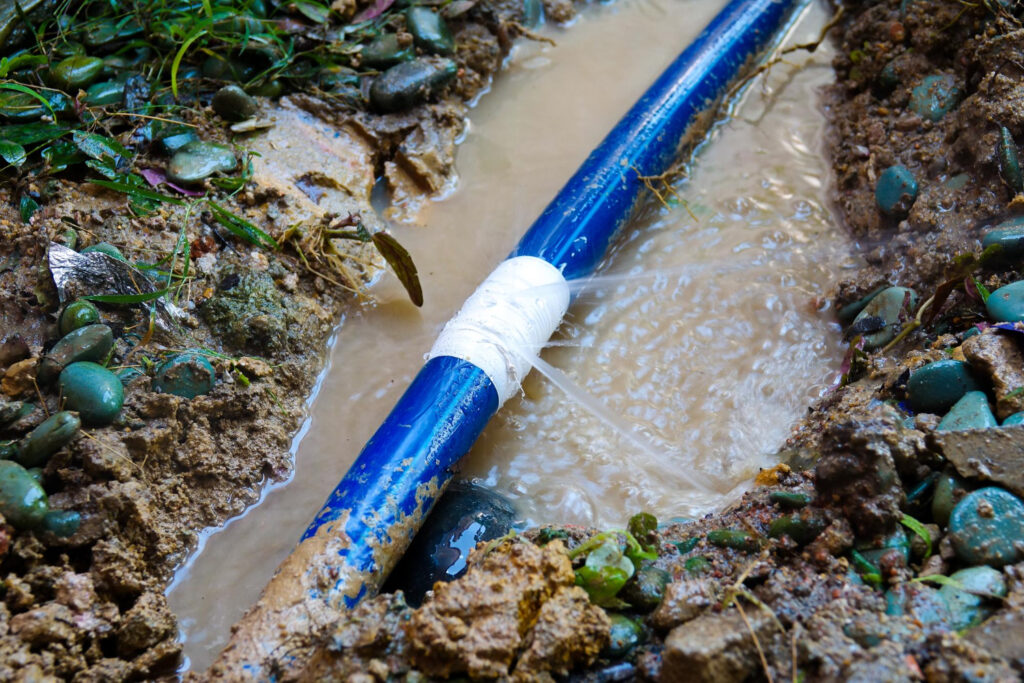
Outdoor plumbing system repair in Fairbanks covers a range of problems that are more consequential than the same repairs would be in a milder climate. An exterior water line, a yard hydrant, or an outdoor faucet that fails in most parts of the country is an inconvenience.
In Fairbanks, where freeze cycles begin early, extend long, and apply stress to buried and surface-mounted fixtures that accumulates over multiple seasons, the same failure can represent hidden damage throughout an outdoor plumbing run rather than a single isolated point.
Understanding where outdoor plumbing problems actually start and how they present helps property owners address them before they become larger repairs.
In this article, you’ll learn why outdoor plumbing problems extend further than their visible symptoms suggest, how freeze damage reveals itself after the fact rather than during the freeze event, why finding the source of an outdoor leak requires more than locating the wet spot, and what a proper outdoor plumbing repair looks like in a Fairbanks property built to survive the next freeze season.
Here’s what you’ll find below.
- Outdoor plumbing problems rarely stay outside for long
- Freeze damage often shows up after the weather changes
- The visible leak may not be where the repair starts
- Fairbanks properties need repairs built for the next season
Keep reading to understand how outdoor plumbing failures develop in Interior Alaska, what a licensed plumber evaluates when diagnosing them, and what separates a durable outdoor repair from one that produces the same call next spring.
Outdoor plumbing system repair refers to the diagnosis and correction of failures in exterior water supply components including hose bibs, frost-free faucets, yard hydrants, underground supply lines, and the fittings, shutoffs, and access infrastructure that serve those fixtures in a residential or light commercial property.
Outdoor plumbing problems rarely stay outside for long
The outdoor fixtures on a Fairbanks property are connected to the interior supply system. A leak or pressure problem outside the building does not stay contained to the exterior. It shows up in water bills, indoor pressure, and in some cases moisture at the foundation or basement wall before any outdoor symptom is apparent to the homeowner.
A leaking hose bib can waste water before anyone notices
A hose bib, the threaded exterior faucet mounted on the house wall that accepts a garden hose connection, is one of the most frequently used and least frequently inspected fixtures on a residential property. A hose bib that has developed a packing gland leak, a deteriorated seat washer, or a cracked body from freeze damage may release a small but continuous flow of water that is not visible from the ground if it is running down the exterior wall or into a planter rather than dripping visibly from the spout.
A slow continuous release from a hose bib at a modest rate produces a significant water loss over the course of a month. That volume appears on the utility bill as unexplained consumption, and the source is often not identified until a plumber inspects the fixture directly.
Common hose bib failure points and their causes:
- Worn seat washer: The rubber washer at the end of the stem compresses against the brass seat to stop flow. Repeated use wears the washer flat, allowing a slow drip at the spout.
- Failed packing gland: The packing material around the valve stem, which prevents water from escaping along the stem when the valve is open, dries out and compresses over time and allows water to appear at the handle area.
- Cracked body or back plate: Freeze damage that splits the brass body of the fixture or the fitting connecting it to the supply line may not produce visible dripping at the exterior but can release water into the wall cavity behind the mounting point.
- Loose or failed connection at the supply line: The threaded or soldered connection between the hose bib and the supply line inside the wall can develop a slow leak that is visible only from inside the wall or in the crawl space below.
Yard hydrant trouble can point to issues below ground
A yard hydrant, the tall standpipe-style outdoor water supply fixture common on rural and semi-rural Fairbanks properties, is designed to drain the supply water below the frost line after each use to prevent freeze damage to the riser pipe. When the hydrant is functioning correctly, closing the handle drops a plunger that stops flow at the buried valve body and opens a drain port that allows the water in the riser to drain into the surrounding gravel bed.
When the hydrant is not functioning correctly, the drain port may be obstructed, the plunger assembly may be worn or misaligned, or the buried gravel drain bed may have become saturated or silted over time. Any of these conditions leaves water in the riser after the handle is closed, which then freezes during the first hard frost and cracks the riser pipe or the valve body.
Yard hydrant problems that indicate underground issues:
- Wet ground at the hydrant base after use: The drain bed is saturated or the drain port is discharging laterally at the surface rather than draining downward into the gravel.
- Slow return to full pressure after opening: The buried valve body is partially obstructed or the supply line has a restriction below ground.
- Handle that closes but does not stop flow completely: The plunger assembly has worn seals or the plunger rod is bent, preventing full closure at the buried valve.
- Water in the riser when the hydrant is off: The drain port is blocked, either by sediment, root intrusion, or a collapsed drain bed, leaving the riser filled and vulnerable to freeze damage.
A hydrant that has been draining slowly or showing wet ground at the base should be evaluated before the freeze season begins, not after the riser has cracked.
Exterior line leaks can affect pressure inside the home
An underground exterior supply line that is leaking between the meter connection and the house introduces two problems simultaneously. It wastes water at a rate that may not be obvious from any single interior fixture’s behavior, and it reduces the static pressure available to the indoor distribution system. The pressure reduction is most noticeable during peak demand periods, when multiple fixtures are open and the supply line is under maximum flow demand.
A homeowner who notices reduced pressure at interior fixtures during morning peak use and cannot identify any obvious cause inside the house should consider the possibility that the supply line between the meter and the foundation has a leak. The water line supply system serving the house is the first place a plumber checks when indoor pressure problems have no obvious interior cause.
Confirming a supply line leak before any excavation begins involves isolating the interior supply system and monitoring pressure or meter movement to determine whether water is leaving the system and at what rate. A system that holds pressure with all interior fixtures closed but shows continuous meter movement has an active leak between the meter and the first interior shutoff, which places the likely source in the underground exterior supply run.
Freeze damage often shows up after the weather changes
One of the most counterintuitive aspects of outdoor plumbing damage in Fairbanks is that the damage occurs during the freeze event but presents itself weeks or months later when water returns to the affected pipe. A cracked fitting that was sealed by ice all winter becomes an active leak the first time pressure returns to the line in spring.
Cracked fittings may not leak until water demand returns
When water inside a pipe or fitting freezes, it expands with enough force to split brass bodies, crack threaded plastic fittings, and separate soldered copper connections. The ice that caused the split then fills the crack, maintaining a temporary seal for the duration of the freeze. The pipe or fitting looks intact because the ice plug is holding. The damage does not become visible until the ice melts and water pressure returns.
This delayed-presentation pattern means that spring, which is when most Fairbanks homeowners reconnect outdoor water supply and restore flow to exterior fixtures, is also when the damage from the previous winter reveals itself. The connection that cracked in December becomes an active leak in April when the outdoor system is repressurized.
The fixtures most commonly presenting freeze-related cracking in this pattern:
- Hose bibs installed without proper interior shutoffs, which could not be isolated and drained before the freeze season and held water in the exposed body through the winter.
- Exposed supply connections in unconditioned spaces, including crawl spaces, unheated utility rooms, and garage areas where pipe sections were not adequately insulated.
- Yard hydrant riser pipes where the drain port was blocked and the riser retained water that froze and expanded inside the standpipe.
- Irrigation system components that were not fully blown out before the first freeze, retaining water in valve bodies, backflow preventers, and above-grade supply lines.
Frost-free fixtures still fail when installed or drained incorrectly
Frost-free hose bibs and frost-free yard hydrants are designed to prevent freeze damage by locating the actual shutoff point below the frost line and allowing the portion of the fixture above ground to drain after each use. They work as designed when installed at the correct depth, sloped to drain properly, and used without a hose left connected after the season ends.
They fail when any of those conditions are not met. A frost-free hose bib installed horizontally or with a slight back-pitch toward the house retains water in the standpipe after the valve closes rather than draining it, which defeats the frost-free design entirely. A frost-free hydrant with a blocked drain port retains water in the riser for the same reason. A frost-free hose bib with a garden hose and nozzle left connected after the season ends creates backpressure at the drain hole that prevents drainage, leaving the standpipe full of water through the winter.
According to the U.S. Department of Energy’s guidance on plumbing in cold climates, proper installation depth and drainage orientation are the primary factors determining whether a frost-free outdoor fixture survives freeze conditions intact. A fixture that has been repaired or replaced multiple times at the same location in consecutive years is almost always failing because of an installation condition that was not corrected with the initial repair.
Thawing soil can reveal underground line movement
Frozen soil in Interior Alaska can experience significant movement during freeze and thaw cycles, particularly in areas with a high silt or clay content in the soil that is more susceptible to frost heave. An underground supply line that was correctly bedded and sloped at installation can develop bellies, lifted sections, or displaced joint connections after multiple seasons of freeze and thaw movement in the surrounding soil.
This soil movement is gradual and does not produce immediate catastrophic failure. It produces a subtle change in the pipe’s geometry that may result in a low-slope section that traps water and freezes more reliably than the rest of the line, a joint that has shifted slightly out of its original alignment and now seeps under pressure, or a section of pipe that has risen enough that it no longer has adequate frost depth protection.
Thawing soil in spring often reveals these conditions by exposing sections of line that were previously buried, by creating soft wet ground above a line where soil settlement has occurred, or by producing pressure changes in the system that were not present the previous fall. A plumbing inspection that includes the outdoor supply run as part of its scope can identify these conditions before they produce a complete failure.
The visible leak may not be where the repair starts
An outdoor plumbing leak that produces a wet area in the yard, a soggy section of soil near the foundation, or a soft spot in a gravel drive is telling the homeowner where the water has surfaced. It is not reliably identifying where the water is leaving the pipe.
Wet soil can travel away from the damaged pipe
Water that escapes from an underground supply line under pressure follows the path of least resistance through the surrounding soil. Depending on soil composition, burial depth, and the pressure in the line, that water can travel several feet horizontally from the actual leak point before it saturates the surface. The wet spot the homeowner sees in the yard may be directly above the leak, or it may be four feet away from it in the direction of the natural soil drainage.
In Fairbanks properties with silty or sandy soil, water from a pressurized underground line can travel significant distances through the soil profile before surfacing. It can also follow the path of a gravel trench, which offers lower resistance than the surrounding native soil, and emerge at the end of the trench rather than above the leak point. Excavating directly at the wet surface spot without prior diagnostic work will find wet soil and may not find the pipe.
The diagnostic tools that narrow the search before excavation starts include pressure testing to confirm the leak is active and estimate the loss rate, and in some cases acoustic listening equipment on the ground surface to identify the point of maximum sound signature from a pressurized water release. These steps reduce the excavation footprint significantly on a property where digging is disruptive to landscaping, gravel drives, or frozen ground conditions.
Low pressure can narrow the search before digging begins
Monitoring system pressure behavior during the diagnostic phase provides useful information about where in the supply system the leak is located. A supply line that loses pressure rapidly when isolated and all fixtures are closed has a significant leak somewhere in the isolated section. A supply line that loses pressure slowly has a smaller leak or a seeping fitting rather than an open crack.
By isolating sections of the supply system progressively and checking whether each isolated section holds pressure, a plumber can identify which section contains the leak before any excavation begins. For a property with a long exterior supply run that passes through several accessible isolation points, this process can narrow the leak location to a 10 or 15-foot section of pipe rather than the full run.
The practical value of this step is that it determines how much of the supply line needs to be excavated. A diagnostic approach that confirms the leak is in the section nearest the meter, for example, prevents unnecessary excavation of the section nearest the house where the pipe is more likely to be buried under improved surfaces.
Shutoffs and access points affect repair speed and disruption
The speed and disruption level of an outdoor plumbing repair depends significantly on whether the property has functional shutoffs at useful points in the outdoor supply system, and whether those shutoffs are accessible. A property with a shutoff at the meter, a shutoff at the foundation entry point, and shutoffs at each outdoor fixture can be isolated and repaired with minimal disruption to indoor water service. A property with a shutoff only at the meter requires shutting off the entire water supply to the house to perform any work on the exterior line.
Access infrastructure that affects outdoor repair efficiency:
- Meter shutoff accessibility: The meter box must be accessible and the shutoff must operate freely. A seized meter shutoff that requires utility company intervention to close adds time to any repair.
- Foundation entry shutoff: A shutoff immediately inside the foundation where the supply enters the house allows the outdoor system to be isolated without interrupting interior supply.
- Fixture-level shutoffs: Individual shutoffs serving each outdoor fixture allow the fixture to be isolated and repaired without affecting other outdoor supply points.
- Cleanout and access ports in buried lines: Long supply runs benefit from access chambers at intermediate points that allow inspection and pressure testing without excavation at each check point.
A repair visit that identifies missing shutoffs as part of its scope can recommend adding them at the same time the primary repair is performed, which reduces the disruption and cost of any future outdoor repair at the same property.
Fairbanks properties need repairs built for the next season
An outdoor plumbing repair in Fairbanks that restores function without accounting for the conditions that caused the failure will produce the same result at the same time next year. Durable outdoor repairs address both the immediate failure and the vulnerability that allowed it to occur.
Depth, insulation, and drainage matter for outdoor lines
The frost protection of an outdoor supply line in Fairbanks depends on three factors working together: adequate burial depth to keep the pipe below the active frost zone, appropriate insulation at any shallow or exposed section, and proper drainage orientation to prevent water retention in sections that may experience temperature stress.
The active frost depth in Fairbanks can exceed 6 feet in severe winters and in soil conditions with high moisture content. Supply lines buried to code minimum depths appropriate for milder climates are not adequate for Interior Alaska conditions. A line installed at 4-foot depth that experienced freeze damage has almost certainly been repaired or replaced more than once, because the burial depth leaves it in the active freeze zone during cold winters.
Repair work that includes upsizing the burial depth of a previously shallow line, adding closed-cell foam insulation to any exposed or shallow section, and confirming that the pipe slope drains away from the structure rather than toward it produces a repair that is designed to survive the next freeze season rather than simply restoring flow for the current season.
Replacement parts should match the way the fixture is actually used
An outdoor faucet or yard hydrant that failed because it was not drained correctly, not installed at the right depth, or connected to an incompatible configuration needs to be replaced with a fixture that matches the actual conditions of its use rather than a direct equivalent of what failed.
A frost-free hose bib installed on a wall where the supply enters at a slight upward angle needs a stem length long enough to place the valve body below the frost line and a body designed to drain reliably given the installation geometry. A yard hydrant serving a location where the natural soil drainage is poor needs a gravel drain bed that is adequately sized and positioned to accept the riser drainage without becoming saturated.
Replacement part selection considerations for Fairbanks outdoor fixtures:
- Stem length on frost-free bibs should be selected based on the actual wall thickness and the depth of the supply connection behind the wall, not a standard residential length that may place the valve body in the frost zone.
- Hydrant height above grade should allow comfortable operation while the buried section reaches below the calculated frost depth for the installation site.
- Body material for replacement fixtures in locations with high mineral water content should favor brass over chrome-plated zinc, which corrodes faster in hard water conditions common to some Fairbanks area water supplies.
- Backflow prevention at hose bib connections should be a vacuum breaker type appropriate for the supply pressure at that fixture to prevent back-siphonage when a hose is connected to a water source lower than the bib.
A repair visit can prevent repeat damage when temperatures drop again
The most valuable part of an outdoor plumbing repair in Fairbanks is not the fitting that gets replaced or the pipe section that gets excavated. It is the assessment of surrounding conditions that the repair visit makes possible. A plumber who is already working on an exterior supply line is in a position to observe the burial depth of adjacent sections, the condition of the insulation on any exposed runs, the functionality of the shutoffs serving the system, and the drainage orientation of frost-free fixtures.
That observational scope identifies conditions that will produce the next failure before the next failure occurs. A supply line section that is marginally deep and has survived several seasons without incident is not necessarily safe. It may have been protected by snow cover in previous winters, or by mild frost depths that did not reach its installation depth. A Fairbanks winter with less snow cover and a deeper frost penetration can reach a pipe that has survived at the same depth for years.
For properties in the Fairbanks service area with outdoor plumbing installed in multiple decades across several construction phases, a comprehensive outdoor plumbing assessment during a repair visit produces a clear picture of which components are correctly configured for Alaskan conditions and which are carrying seasonal risk that has not yet produced a failure.
Conclusion
Outdoor plumbing system repair in Fairbanks addresses a category of work where the consequences of incomplete diagnosis or a deferred repair compound from one season to the next. A cracked fitting left unrepaired through a summer becomes a flooded crawl space the following spring.
A yard hydrant drain bed that is saturating rather than draining produces a cracked riser pipe in the first hard freeze. A supply line at marginal depth survives until a cold winter without adequate snow cover removes the protection it has relied on.
The repairs that produce durable outcomes in this climate account for the conditions that caused the failure, not just the failure itself. Correct burial depth, adequate insulation at exposed or shallow sections, proper drainage orientation on frost-free fixtures, and functional shutoffs at useful points in the supply system are what distinguish a repair that performs through the next season from one that generates the same call at the same time next year.
If an outdoor fixture, yard hydrant, or buried supply line is showing signs of damage or has already failed, contact Prospector Plumbing to have a licensed plumber assess the full outdoor system and perform a repair built for Fairbanks conditions.