

Boiler vs. furnace: which heating system works best in Interior Alaska?
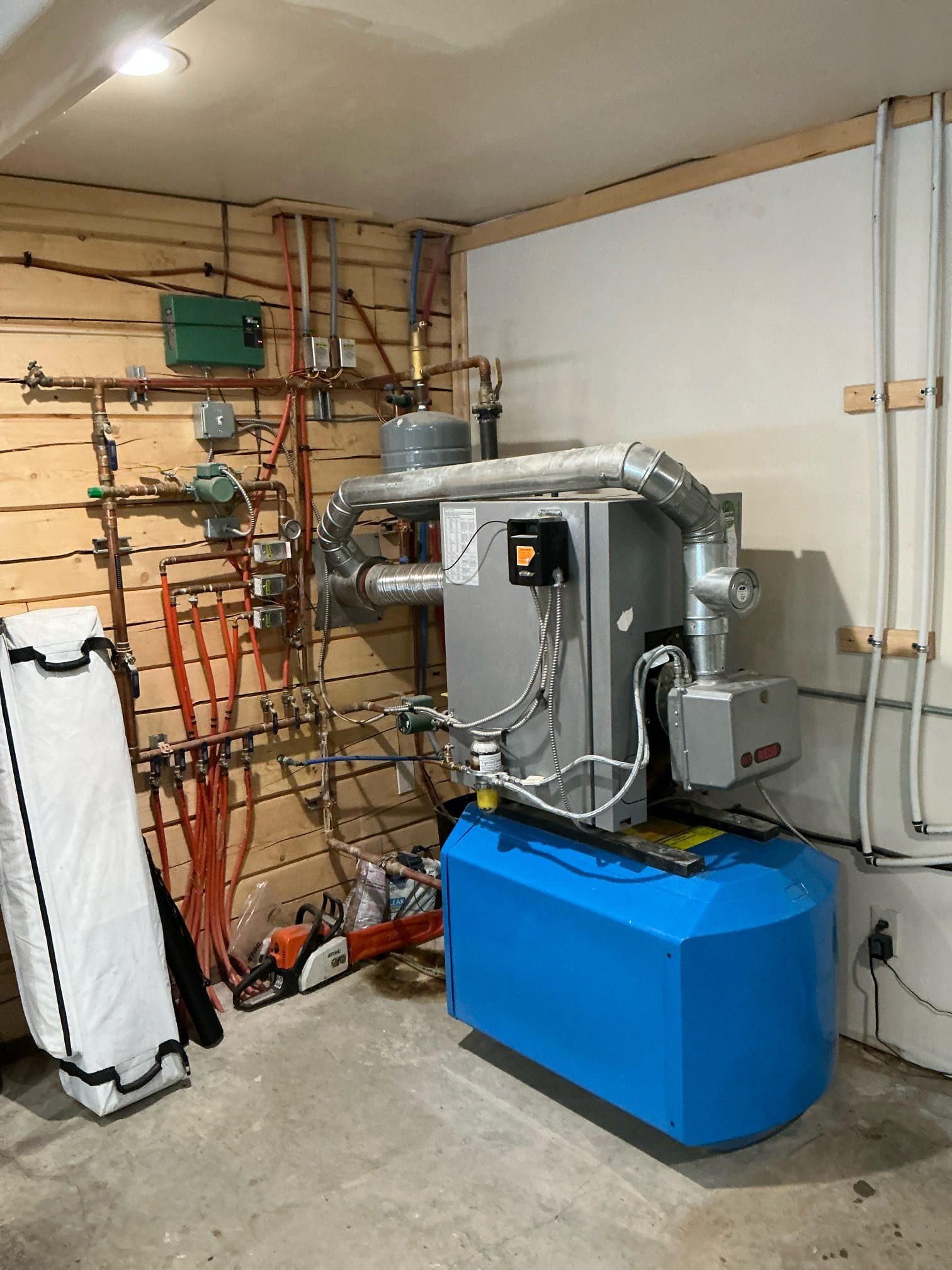
If you have ever stood in your basement staring at an aging heating system, wondering whether to replace it with the same thing or switch entirely, you already know this decision is not simple. In most of the country, that choice is mostly about upfront cost and personal preference. In Fairbanks and North Pole, it is a different conversation, because the equipment you pick has to survive months of temperatures that most furnaces and boilers elsewhere in the U.S. were never designed to handle.
Boilers and furnaces solve the same basic problem in very different ways, and Interior Alaska's climate happens to favor one of them for reasons that have little to do with brand or budget. Older homes in Fairbanks often already have a hydronic boiler system running through radiators or in-floor loops, a holdover from a housing stock built decades ago when boilers were the standard here. Newer homes and additions are more likely to run forced-air furnaces instead.
Choosing between the two, or deciding whether to stick with what you have, means understanding how each system actually performs when it is minus 40 outside and staying that way for days. This article breaks down how boilers and furnaces work, where each one has an edge in this climate, and what actually drives the general heating repair decision for homeowners in Fairbanks, North Pole, and the Mat-Su Valley.
In this article, you will learn about:
- How boilers and furnaces heat your home differently
- Why Interior Alaska's climate changes the comparison
- Cost, efficiency, and maintenance differences that matter here
- How to decide which system fits your home
Keep reading to find out which system is the better long-term bet for your house before your next heating decision costs you a cold winter.
How boilers and furnaces actually heat your home
It helps to start with the basic mechanics, because the difference in how heat reaches your living space explains almost everything else in this comparison. A furnace heats air directly and pushes it through ductwork with a blower fan. A boiler heats water or produces steam, then circulates that heated water through pipes to radiators, baseboard units, or in-floor tubing, and the heat radiates into the room from there.
That distinction matters more than it sounds like it should. Air loses heat quickly once it stops moving, which is part of why forced-air rooms can feel drafty or uneven. Water holds heat far longer, which is why hydronic systems tend to produce a steadier, less fluctuating warmth. Homeowners who have lived with both often describe furnace heat as "on and off" and boiler heat as "always there."
Both systems need a heat source, whether that is natural gas, fuel oil, propane, or electricity, and both need a functioning distribution system to move that heat where it needs to go. Where they diverge sharply is in what that distribution system requires and how it holds up over an Interior Alaska winter.
Furnaces and forced-air distribution
A furnace's forced-air system depends on a network of ducts, a blower motor, and often a network of registers and returns throughout the house. When everything is sealed and sized correctly, this setup heats a home quickly, since air moves fast through the ducts and responds fast to thermostat changes.
The catch is that ductwork run through unheated spaces, crawlspaces, or attics loses heat before it ever reaches a room, and that loss gets worse as the temperature gap between inside and outside grows. In a climate where outdoor temperatures can sit below zero for weeks, even well-insulated ducts bleed some efficiency. Leaky or poorly sealed ductwork loses considerably more.
- Forced-air heats up fast, useful for homes that are unoccupied during the day and need a quick recovery
- Duct leaks and poor sealing cause real efficiency loss in extreme cold
- Filter changes and duct cleaning become more frequent needs in dusty or older homes
Boilers and hydronic distribution
A boiler's hydronic system moves heated water through pipes to radiators, baseboard convectors, or radiant floor loops. There is no ductwork to leak air, and no blower fan pushing warm air past drafty windows and doors. The water itself acts as thermal mass, meaning it keeps radiating heat for a while even after the boiler cycles off.
This is part of why so many older Fairbanks homes, and many built through the mid-1900s Interior Alaska boom years, were built with hydronic boiler heat in the first place. It is a system that tolerates sustained extreme cold well, because it is not fighting constant air loss through a duct network.
- Hydronic systems hold heat longer between burner cycles
- No ductwork means no duct leakage losses
- Radiant floor heat pairs especially well with slab-on-grade construction, common in newer builds
Combination and hybrid setups
Some homes run a mix, particularly additions or renovated spaces where extending existing ductwork or piping was impractical. A home might keep an oil-fired boiler for the main house and add electric baseboard or a ductless mini-split for a garage conversion or bonus room.
This hybrid approach is common enough in Fairbanks and North Pole that it should not be treated as unusual or a red flag. It usually reflects how a house grew over time rather than a design flaw. What matters more is whether each zone is sized correctly for the space it serves, and whether the systems get routine plumbing care and heating maintenance independently, since neglecting one does not get forgiven by the other running fine.
Why Interior Alaska's climate changes this comparison
Most heating system comparisons written for a national audience assume a climate with a handful of genuinely cold weeks each winter.
That assumption falls apart here. The 2025-26 winter season averaged a stretch that the National Weather Service and University of Alaska Fairbanks researchers have described as the coldest December-through-March period on record for the city, with dozens of days dropping to negative 40 degrees Fahrenheit or colder, according to Alaska Public Media's coverage citing National Weather Service climate data. T
hat is not a cold snap. That is a sustained operating condition your heating system has to survive for months, not days.
This kind of extended deep-cold exposure puts different stress on the two systems. A furnace's ductwork, especially runs through crawlspaces or attics, has more surface area exposed to conditioned-to-unconditioned temperature swings, and sustained negative-degree stretches expose weak duct seals and thin insulation in a way that a mild winter never would.
A hydronic system faces its own version of that risk: pipes running through unheated spaces are vulnerable to freezing if circulation stops, which is why boiler systems in this climate need reliable backup power and freeze protection built in.
Federal energy data backs up how central heating fuel choice is to daily life here.
About one-third of Alaska households rely on petroleum products such as fuel oil for home heating, according to the U.S. Energy Information Administration, a far higher share than almost anywhere else in the country. Interior Alaska specifically leans on oil-fired systems more than the state average.
A state-commissioned cost analysis from the Alaska Department of Environmental Conservation found that the average Fairbanks North Star Borough home with a central oil-fired boiler burns roughly 1,254 gallons of heating oil per year, which gives you a real sense of how much load these systems carry across a full heating season.
- Sustained sub-zero stretches expose duct leakage and insulation gaps faster than a mild climate would
- Hydronic systems need active freeze protection for any piping running through unheated spaces
- Backup power matters more here, since both blower motors and circulator pumps fail without electricity
- Fuel storage and delivery logistics, especially for oil-fired systems, factor into system choice more than in most of the country
What this means for heating degree days
Heating degree days are a way of quantifying how much heating demand a location experiences over a season, and Fairbanks posts numbers most of the country never sees. Historical climate records for Fairbanks put average annual heating degree days above 13,000, among the highest of any populated area in the United States. Interior Alaska's overall energy profile reflects that reality.
According to the Alaska Energy Authority, homes across Alaska's Railbelt and Southeast regions use roughly 269 million BTUs of energy per household each year, with about 80 percent of that going toward heating alone.
That 80 percent figure is worth sitting with. In a temperate climate, heating might be a seasonal cost that competes with cooling, water heating, and appliances for your energy budget. Here, heating is the budget. Whatever system you choose is going to be running for a large share of the year, which is exactly why efficiency losses that seem minor elsewhere, like a leaky duct joint or an underinsulated pipe run, compound into real dollars over an Interior Alaska winter.
- Heating typically accounts for roughly 80 percent of total home energy use in this region, more than double the share seen in most of the Lower 48
- A poorly sealed furnace duct run or an uninsulated boiler pipe run loses heat every hour it operates, not just during cold snaps
- Small efficiency gains matter more here simply because the system runs for so much of the year
Living with the fuel oil reality
Because so much of Interior Alaska depends on delivered fuel oil rather than piped utility gas, homeowners here also manage a logistics problem that furnace and boiler owners elsewhere rarely think about. Fuel tank levels, delivery scheduling, and price swings between deliveries all factor into which system feels more manageable season to season.
A boiler burning through roughly 1,254 gallons a year means planning multiple deliveries across a single winter, and running low during a cold stretch is its own kind of emergency. Furnaces running on oil face the same delivery logistics, so the fuel-planning burden is really a function of fuel type rather than boiler versus furnace. What changes between the two is how the system behaves if a delivery runs late and the tank runs dry.
- Oil-fired boilers and furnaces both need a monitored tank level, since running dry mid-winter risks air in the lines and a difficult restart
- Homes further from Fairbanks proper, including parts of the Mat-Su Valley, may face longer delivery windows worth planning around
- A backup delivery plan or a slightly larger tank buys a real margin of safety during an extended cold stretch
Why so many Fairbanks homes still run boilers
If you own an older home in Fairbanks or North Pole, there is a good chance it already has a boiler, and that is not an accident of history you need to fight against. Hydronic heat was the standard approach for a long stretch of the area's residential construction, and many of those original cast-iron radiator or baseboard systems are still running decades later with proper boiler maintenance.
Replacing a functioning hydronic system with forced-air just because furnaces are more common nationally is rarely the right call. Ripping out radiators and installing ductwork in a home that was not built for it is expensive, disruptive, and does not automatically deliver better comfort. In most cases, keeping and modernizing an existing boiler system, or looking into an oil-to-gas boiler conversion, makes more sense than switching heating types entirely.
Cost, efficiency, and maintenance differences that actually matter here
Nobody makes this decision purely on comfort. Upfront cost, fuel cost, and how much a system demands in ongoing maintenance all weigh into it, and Interior Alaska's specific conditions shift each of these compared to a national average.
Fuel type is usually the first fork in the road. Natural gas is generally the least expensive fuel to run a furnace or boiler on where it is available, but not every neighborhood in Fairbanks and North Pole has gas service.
Fuel oil has long been the default for homes without gas access, and research from the USDA Forest Service on wood energy adoption in Alaska found that fuel oil prices in the four to five dollar per gallon range are typically what it takes before homeowners seriously consider switching to an alternative heat source. Propane and electric systems fill in the gaps depending on what is available at a given property.
Maintenance needs differ too, though not in the direction people often expect. A furnace's moving parts, including the blower motor, ignition system, and filter, need regular attention, and filters especially need more frequent changes in a dusty or wood-heated home. A boiler's moving parts, namely the circulator pump, expansion tank, and pressure relief valve, are simpler in number but each failure point tends to be more consequential, since a stuck circulator pump or a failed pressure valve can shut the whole system down at once.
Comparing furnace and boiler upkeep
- Furnace maintenance centers on filters, blower components, and ignition or pilot systems
- Boiler maintenance centers on the circulator pump, expansion tank, pressure relief valve, and water quality
- Both systems need annual professional tune-ups before the coldest stretch of winter arrives, not after
Lifespan is another practical difference worth knowing before you commit to either path. Furnaces typically run 15 to 20 years with proper furnace maintenance, while boilers, especially cast-iron models, often run 20 to 30 years or longer. That longer lifespan is part of why so many original Fairbanks boiler systems are still in service. It also means a boiler decision tends to be a longer-term commitment, so getting the sizing and fuel choice right upfront matters more than it would with a furnace you will likely replace sooner.
The oil-to-gas conversion question
If your home currently runs an oil-fired boiler and gas service has since become available on your street, converting is worth seriously evaluating rather than assuming your existing setup is the cheapest path forward long-term. Conversions are not simple swaps. They typically involve replacing the burner assembly, adjusting or replacing the boiler itself depending on age and condition, and coordinating a gas utility connection.
The upfront cost of a conversion is real, but so is the ongoing savings potential when gas is reliably cheaper than oil delivery in your area. This is exactly the kind of decision where running the numbers on your specific fuel costs, delivery logistics, and boiler age matters more than any general rule of thumb.
When repair stops making sense
At some point, every heating system homeowner faces the repair-or-replace question, and the answer depends on more than the repair estimate alone. A system's age relative to its expected lifespan, the frequency of recent breakdowns, and whether parts are still readily available all factor in.
- An aging cast-iron boiler with a cracked heat exchanger is usually a replace, not a repair
- A furnace blower motor failure in a system under ten years old is usually worth repairing
- Repeated pilot light or ignition failures on an older furnace often signal it is nearing the end of its useful life
- A boiler that needs frequent water treatment or pressure adjustments may have a failing expansion tank rather than a simple fix
Getting an honest read on which category your system falls into is exactly the kind of judgment call a second opinion helps with, especially before spending money on a furnace repair that only buys you another season.
How to decide which system actually fits your home
There is no universal right answer between boilers and furnaces, and anyone who tells you otherwise is skipping past the details that actually matter for your specific house. The right call depends on what you already have, what fuel is available at your address, how your home is built, and what you are trying to solve.
If you already have a working hydronic system and no compelling reason to change it, the strongest move is usually to maintain and modernize it rather than replace the heating type entirely. If you are building new or doing a major renovation, forced-air offers faster installation and easier future ductwork modifications, while radiant hydronic heat offers a comfort profile many homeowners genuinely prefer once they have lived with it.
- Start with what your home already has and whether it is functioning well, since replacing a working system with a different type rarely pays for itself
- Check what fuel sources are actually available at your address before assuming a fuel switch is possible
- Consider your home's construction type; slab-on-grade favors radiant hydronic, while homes with existing ductwork favor staying forced-air
- Weigh how the space is used; a home occupied all day benefits from hydronic's steady heat, while a home that is empty most of the day may prefer a furnace's fast recovery
- Get a professional load calculation done rather than sizing a new system off the old one's rated output, since original systems were sometimes oversized or undersized to begin with
Signs your current system needs a closer look
Certain warning signs mean it is time to have a professional evaluate your system regardless of whether you are leaning boiler or furnace. Uneven heat between rooms, a system that runs constantly without ever quite catching up, or rising fuel bills without a clear explanation are all worth investigating before winter tests the system's limits.
- Cold spots in rooms farthest from the furnace or boiler
- A noticeable increase in fuel or gas usage without a change in habits
- Strange noises: banging or knocking in boiler pipes, or a furnace that cycles on and off rapidly
- Visible rust, water staining, or corrosion around a boiler's base or connections
These signs do not automatically mean full replacement, but they are exactly the kind of detail a technician needs to see in person to give you an accurate read rather than a guess based on age alone. If you are also noticing warning signs in your water line, a full system check covers both at once.
Questions worth asking before you commit
Before scheduling a full system replacement of either type, a short list of questions helps separate a real need from an assumption carried over from a different climate or a different house. These are worth working through with whoever evaluates your home, not just deciding on your own.
- Is the current system actually failing, or is it just old and unfamiliar to the current homeowner?
- What fuel sources are realistically available at this specific address, not just in the neighborhood generally?
- Does the home's construction (ductwork already in place, slab foundation, existing radiators) favor one system type over the other?
- What would a full replacement actually cost against what a repair or partial upgrade would cost this season?
Working through these questions with real numbers, rather than general assumptions, is what keeps a heating decision from turning into an expensive guess.
Getting the right guidance for your specific house
Because so much of this decision depends on the specifics of your home's construction, fuel access, and current system condition, the most useful next step is usually a direct evaluation rather than more research. A technician who has walked through hundreds of Fairbanks, North Pole, and Mat-Su Valley homes, including through boiler installation and boiler replacement projects, can tell you within one visit whether your current system is worth keeping, converting, or replacing, and what that actually costs given your fuel access and home layout.
Conclusion
Boilers and furnaces both have a genuine place in Interior Alaska homes, and the right choice has less to do with which system is objectively better and more to do with what your specific house, fuel access, and family's routine actually need. A hydronic system inherited from an older Fairbanks home is often worth keeping and modernizing rather than replacing outright, while a furnace makes sense for homes built around ductwork or needing fast heat recovery.
What matters most is that whichever system you have gets sized correctly, maintained on a real schedule, and evaluated honestly when something starts to go wrong rather than pushed past its limits through another negative-40 stretch. The cost of guessing wrong on a heating system in this climate is not just a bigger repair bill later, it is comfort and safety during months when the system cannot afford to fail.
If you are weighing a repair, a conversion, or trying to decide whether your current setup is even the right type of system for your home, Prospector Plumbing and Heating can walk through your specific situation and give you a straight answer. Reach out to Prospector Plumbing and Heating to get a professional read on your heating system before the next cold stretch arrives.
Licensed & insured Alaska plumbing and heating. Locally owned and operated! We're the happiest plumbers in Alaska and go the extra mile on every job!
Fairbanks
135 32nd Avenue
Fairbanks AK 99701
North Pole
North Pole, AK 99705
Mat-Su Valley
1712 N Williwaw Way
#1 Wasilla, AK 99654
Eagle River
AK 99577