
5 signs your Wasilla home needs a water softener
If your dishes come out of the dishwasher spotted, your shower door has a permanent cloudy film no amount of scrubbing seems to fix, and you have started buying twice as much shampoo as you used to, your water might be trying to tell you something. Hard water is one of those problems that creeps in slowly enough that most homeowners never connect the dots between a dozen small annoyances and a single underlying cause.
In the Mat-Su Valley, this is especially common because most homes here rely on groundwater rather than a fully treated municipal supply. Wasilla's public water systems draw from deep aquifers, and private wells across the Valley pull from the same glacial and sedimentary formations, both of which pick up dissolved calcium and magnesium as water moves through the ground. That mineral content is what turns ordinary water into hard water, and it does not go away on its own.
The good news is that hard water is one of the easier home problems to diagnose once you know what to look for. It shows up in specific, recognizable ways, from the condition of your fixtures to how your skin feels after a shower. This article walks through the clearest signs that your Wasilla home has a hard water problem and what water softener installation actually does about it.
In this article, you will learn about:
- Visible scale and mineral buildup around your home
- What hard water does to your skin, hair, and laundry
- Appliance and plumbing wear that hard water accelerates
- How to know when it's time for a water softener
Keep reading to find out whether your home is showing the same warning signs Mat-Su Valley homeowners run into every day.
Visible scale and mineral buildup around your home
The most obvious hard water sign is also the easiest to check right now: white, chalky buildup on anything that regularly touches water in your house. This is mineral scale, and it is the direct, visible evidence of dissolved calcium and magnesium leaving deposits behind as water evaporates or heats up.
Scale does not stay contained to one fixture. Once you know what to look for, you usually start noticing it in multiple places at once, because the same hard water is running through every faucet, showerhead, and water-using appliance in the house. Left alone, scale only gets thicker and more stubborn over time.
- Chalky white residue on faucets, showerheads, and drain stoppers
- Cloudy, crusty buildup around the base of your toilet tank or on tank hardware
- A visible ring or film inside the toilet bowl at the waterline that returns quickly after cleaning
- Spotty, cloudy glassware and dishes even straight out of a clean dishwasher
Where scale tends to show up first
Certain spots in a home reveal hard water faster than others simply because they see more repeated exposure to water evaporating or heating. Showerheads are usually the earliest and clearest indicator, since mineral deposits gradually clog the tiny nozzle holes and reduce water pressure and spray pattern.
Kitchen faucets and coffee makers are close behind. If your coffee maker needs frequent descaling, or your electric kettle has a white crust building up inside, that is calcium and magnesium accumulating exactly the way it would inside a pipe or a water heater, just somewhere you can actually see it.
- Check your showerhead first; unscrew it and look for buildup around the nozzle holes
- Check faucet aerators next, since these small mesh screens clog quickly with scale
- Check any appliance that heats water, including coffee makers, kettles, and humidifiers
- Check the toilet tank and bowl waterline, where deposits are easiest to spot against porcelain
Why the Mat-Su Valley sees this so often
Wasilla's public water systems draw from deep aquifers, some reaching 150 to 250 feet below the surface, and private wells across the Valley tap the same glacial and sedimentary formations. Water moving through those layers picks up calcium and magnesium along the way, which is the direct cause of the scale showing up on fixtures throughout the region.
Groundwater plays an outsized role in rural drinking water generally, and the Mat-Su Valley fits that pattern closely.
Groundwater supplies drinking water for more than 90 percent of the rural population in the United States who are not connected to a delivered public supply, according to the U.S. Geological Survey's Ground Water Atlas of the United States, and that reliance on groundwater is exactly what carries dissolved minerals into homes here that would not be an issue with a fully treated municipal source.
When buildup means more than a cosmetic issue
Cosmetic scale is annoying, but the same mineral buildup happening inside your pipes and water heater is not something you can see without a plumber's inspection, and that is the more expensive version of this same problem. Scale accumulating inside pipe walls narrows the interior diameter over time, which is part of why some Mat-Su Valley homeowners notice gradually declining water pressure with no other explanation.
If you are already seeing visible scale on fixtures you can reach and clean, it is worth assuming the same thing is happening, unseen, everywhere else hard water travels, including inside a water heater that has never had a hardness problem addressed.
What hard water does to your skin, hair, and laundry
Hard water's effects are not limited to your fixtures. Calcium and magnesium interfere with how soap works at a basic chemical level, and that interference is something you feel directly, whether it is your skin after a shower or the towels coming out of the wash.
Soap needs to form a proper lather to clean effectively, and dissolved minerals bind with soap before it can do that job, creating a sticky residue instead of a clean rinse. That residue is why hard water leaves a film behind on skin and hair even after you feel like you have rinsed thoroughly.
- Skin that feels tight, dry, or itchy after showering, even with the same soap you have always used
- Hair that feels dull, weighed down, or difficult to fully rinse of shampoo
- Noticeably faster depletion of shampoo, body wash, and hand soap than you would expect
- Laundry that comes out stiff or scratchy, or that fades and wears out faster than it used to
The soap and detergent math
Hard water genuinely requires more soap and detergent to accomplish the same cleaning job, and that adds up over a year in ways most households never calculate. If you find yourself using noticeably more dish soap, laundry detergent, or shampoo than seems reasonable, hardness is a likely explanation before you assume the products themselves changed.
This is also why cleaning takes longer in hard water homes. Rinsing dishes or hair thoroughly enough to remove the soap-mineral residue simply takes more water and more time, which nobody notices as a discrete cost but which shows up in water usage and time spent cleaning all the same.
How this differs from other water quality issues
Hard water is sometimes confused with other water quality problems that produce different symptoms. Iron in well water, for example, tends to leave orange or rust-colored staining rather than the white, chalky residue hardness produces, while sediment or turbidity shows up as cloudiness in the water itself rather than film left behind after it dries.
Private wells are common enough across rural America that this distinction matters to a large share of households. Nearly 40 million people in the United States rely on a domestic well for their drinking water, according to a USGS geonarrative on domestic well use, and untreated well water can carry more than one mineral or contaminant issue at once, so identifying which one you actually have determines whether a softener alone solves the problem.
Laundry and fabric wear over time
Clothing washed repeatedly in hard water tends to wear out faster, and towels in particular lose their softness noticeably over just a few months. The mineral residue that soap leaves behind gets trapped in fabric fibers, which stiffens the material and, over repeated wash cycles, accelerates fiber breakdown.
If your whites are looking grayer than they used to, or towels that were once soft now feel rough no matter what fabric softener you try, that pattern lines up with hard water rather than a laundry routine problem. Homeowners who have already looked into tankless water heater upgrades for efficiency reasons often find hardness was undercutting those savings the whole time.
Appliance and plumbing wear that hard water accelerates
This is the sign homeowners notice last, usually because it shows up as a repair bill rather than something visible day to day. Every appliance in your home that heats or moves water, your water heater, dishwasher, washing machine, and the pipes connecting them, is working harder and wearing out faster because of mineral scale building up inside.
Water heaters are especially vulnerable. Scale settles at the bottom of a tank-style water heater and coats heating elements, which forces the unit to work harder to reach the same temperature. That extra strain shortens the equipment's working life and drives up energy costs in the process.
- Water heaters losing efficiency or failing years earlier than their expected lifespan
- Dishwashers and washing machines developing reduced performance or breaking down sooner than expected
- Reduced water pressure throughout the home from mineral buildup narrowing pipe interiors
- Faucets and valves that become stiff or difficult to operate as internal parts collect scale
Why water heaters take the hardest hit
A water heater running on hard water accumulates sediment on the tank floor and scale on any heating element inside it, and both of those problems compound the same underlying issue: the unit has to burn more energy to heat the same amount of water. Over a few years, that translates directly into a shorter equipment lifespan and a bill that creeps upward without an obvious cause.
If you have needed water heater repair more than once in a relatively short span, or a plumber has mentioned unusual sediment or scale when servicing yours, that is a strong signal hardness is playing a role in the equipment's shortened life.
Signs the wear has already started
A few specific warning signs tend to show up before an appliance fails outright, and catching them early gives you a chance to address the underlying hardness before a full replacement becomes necessary.
- A water heater that takes noticeably longer to produce hot water than it used to
- A dishwasher or washing machine that leaves visible residue on dishes or clothes after a full cycle
- Faucets or shutoff valves that have become stiff, slow, or difficult to turn
- Unusual rattling, popping, or knocking sounds coming from a water heater tank
The cumulative repair cost
None of these individual wear patterns feels dramatic on its own. A water heater that needs replacing a few years early, a dishwasher that stops draining well, a showerhead that needs replacing more often than it should. Added together across a household over several years, though, hard water's cumulative cost in early appliance replacement and plumbing repairs is a real number, not a minor nuisance.
Addressing the mineral content at the source is usually the more cost-effective long-term approach once you add up what hard water actually costs a home over time, especially in a service area where a plumbing inspection can catch scale-related wear before it becomes a bigger repair.
How to know when it's time for a water softener
Not every trace of hardness demands immediate action, but a consistent pattern across several of the signs above is a reliable signal that treatment is worth pursuing rather than continuing to manage symptoms one at a time. The clearest way to move from suspicion to certainty is an actual hardness reading rather than a guess based on how your skin or dishes feel.
Water hardness is measured in grains per gallon or in milligrams per liter, and the standard scale used across the country classifies anything above 7 grains per gallon, or 120 milligrams per liter, as hard, with readings above 10.5 grains per gallon considered very hard.
Hardness has historically been most prevalent across the east-central and western United States, a pattern the U.S. Geological Survey's Water Science School ties directly to the distribution of carbonate aquifers and groundwater carrying higher concentrations of dissolved solids, the same geological mechanism at work in Mat-Su Valley groundwater.
- Get an actual water hardness test rather than relying on symptoms alone
- Compare your results against the standard hardness scale to see where your water falls
- Factor in your household size and daily water usage before choosing a softener's capacity
- Have a technician walk through your specific fixtures and appliances to confirm hardness is the cause, not something else
What the numbers actually mean for your home
A reading in the moderately hard range, roughly 61 to 120 milligrams per liter, may only produce mild symptoms like slightly reduced lathering. Once a home crosses into the hard or very hard range, the scale buildup, appliance strain, and soap consumption described throughout this article tend to become noticeably worse, which is the point where most households decide treatment is worth the investment.
The USGS National Water-Quality Assessment Program evaluated hardness and other properties at roughly 2,100 domestic wells across the country, underscoring how common and well-documented this issue is for households relying on private wells rather than a treated municipal system, which describes much of the Mat-Su Valley.
What a water softener actually does
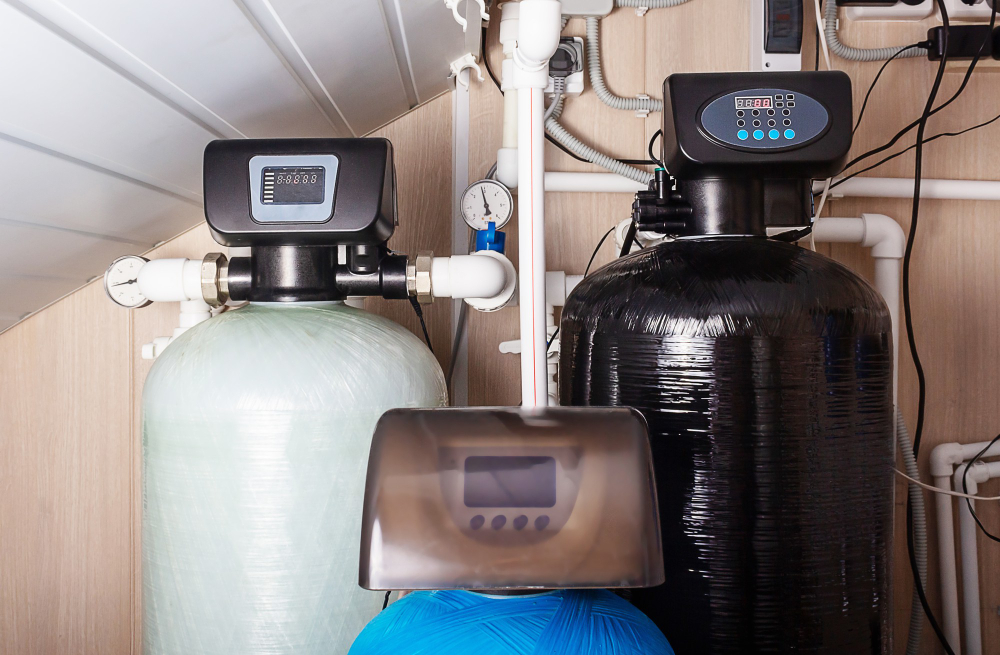
A water softener works through a simple ion exchange process. It removes dissolved calcium and magnesium from your water and replaces them with sodium or potassium ions, which do not create the same scale or soap-interference problems. The result is water that lathers normally, leaves no mineral residue, and stops depositing scale inside your pipes and appliances.
- Softened water stops depositing new scale in pipes, water heaters, and appliances
- Soap and detergent work properly again, which typically reduces how much product a household uses
- Skin, hair, and laundry stop showing the dryness, dullness, and stiffness hard water causes
- Existing appliances often see improved efficiency and a longer working life once scale stops accumulating
Sizing matters here. A system that is undersized will regenerate too often and wear out faster, while an oversized system wastes salt and water unnecessarily, so getting the sizing right from the start saves money and hassle over the equipment's life.
Getting your water tested and treated
If several of the signs in this article sound familiar, the most useful next step is a straightforward water test rather than continuing to guess. A technician can test your water's actual hardness level, walk through what is happening inside your plumbing and appliances, and recommend a system sized correctly for your home and household size.
Conclusion
Hard water rarely announces itself all at once. It shows up gradually, in a shower door that never stays clean, a water heater that fails earlier than it should, and a laundry routine that quietly demands more detergent every year. For Wasilla and Mat-Su Valley homes drawing on groundwater, some level of mineral content is simply part of the water supply, which makes recognizing these signs early the difference between a manageable fix and years of accumulated wear on your plumbing and appliances.
A water softener addresses the root cause rather than any one symptom, protecting your pipes, water heater, and appliances while making everyday tasks like washing dishes and doing laundry noticeably easier. If any of the signs above sound like your household, it is worth getting an actual answer rather than living with the guesswork.
Prospector Plumbing and Heating can test your water, explain exactly what is going on, and recommend the right solution for your home. Reach out to Prospector Plumbing and Heating to schedule a water hardness assessment for your Wasilla home.
Licensed & insured Alaska plumbing and heating. Locally owned and operated! We're the happiest plumbers in Alaska and go the extra mile on every job!
Fairbanks
135 32nd Avenue
Fairbanks AK 99701
North Pole
North Pole, AK 99705
Mat-Su Valley
1712 N Williwaw Way
#1 Wasilla, AK 99654
Eagle River
AK 99577