

Well water vs. city water: What it means for your plumbing in North Pole
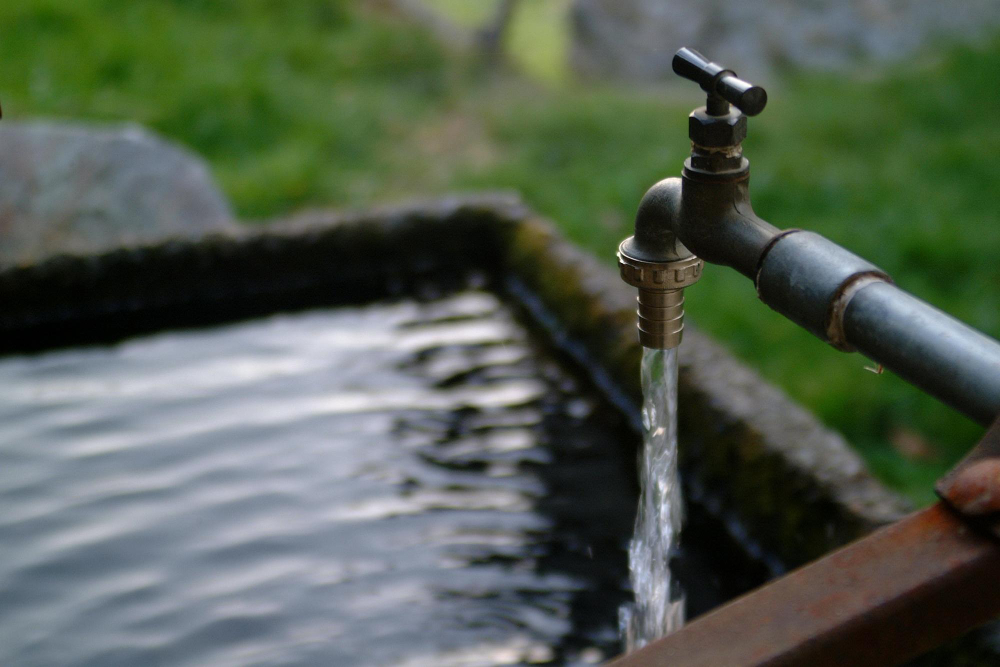
If you just bought a house in North Pole, you probably already know whether you're on well water or hooked into the city system, but you may not know what that choice does to your plumbing over the next ten years. It changes almost everything behind the walls.
Well water and city water put different stress on pipes, fixtures, and water heaters. One relies on a pressure tank and a pump that can fail. The other relies on a municipal line that mostly just works until it doesn't. Neither is automatically better, but each comes with its own maintenance rhythm.
North Pole sits on groundwater that tends to carry more iron and hardness than people expect, and that reality shapes everything from your water heater's lifespan to how often your fixtures clog with scale. Knowing which system you have, and what it actually requires, saves you from guessing when something goes wrong.
In this article, you will learn about:
- How well water and city water systems actually work
- What each system means for your plumbing long term
- The water quality issues specific to North Pole wells
- How to maintain either system so it lasts
Keep reading to find out which system you have, what it demands from your plumbing, and how to keep small issues from becoming expensive ones.
How well and city water systems actually work
The mechanics behind a private well
A private well pulls groundwater up through a submersible pump, pushes it into a pressure tank, and holds it there until a faucet or appliance calls for it. That pressure tank is doing more work than most homeowners realize.
Without it, your pump would kick on every single time you opened a faucet, which would burn it out fast. The tank stores a cushion of pressurized water so the pump only runs in cycles, not constantly.
That single mechanical chain, from casing to pump to tank, is also the entire reason well water fails differently than city water. If any one part breaks, the whole house loses water pressure at once.
- Submersible or jet pump, depending on well depth and setup
- Pressure tank sized to the home's typical demand
- Pressure switch that tells the pump when to start and stop
- Check valve preventing water from draining back down the well
Most North Pole wells are drilled fairly deep given the region's groundwater depth, and pump and tank sizing should match that depth rather than a generic residential default. A pump undersized for the well's depth will short-cycle and wear out early.
How municipal city water reaches your home
City water arrives already pressurized, already treated, and already tested on a schedule set by the utility. Your plumbing starts at the meter, not at a pump.
That means your house pressure is largely out of your hands. It comes from the utility's distribution system, and if it runs high or low, that is a municipal issue, not something a homeowner adjusts at the source.
Because treatment already happened before the water reached your property, city water tends to arrive with more consistent hardness and mineral content than a private well drilled a few hundred feet into shifting Interior Alaska soil. That consistency is one of the real trade-offs homeowners give up when they choose or inherit a well.
Why the difference actually matters for plumbing
The core difference isn't really about taste or convenience. It's about what's touching your pipes every single day for years.
City water is treated to a known chemical profile before it ever reaches your faucet. Well water reflects whatever minerals, gases, and sediment sit in the ground beneath your specific lot, and that profile can vary from one property to the next even within the same neighborhood.
That variability is why two neighbors on wells a few hundred feet apart can have completely different plumbing problems. One might fight iron staining for a decade while the other never sees it.
What well water means for your North Pole plumbing
Iron, sediment, and staining you'll actually see
Interior Alaska groundwater is well known for carrying iron, and North Pole sits squarely in that reality. Iron shows up as rust-colored staining on fixtures, laundry, and sometimes the inside of your water heater tank.
According to USGS, iron concentrations in wells across the Fairbanks area are consistently above 3 milligrams per liter on the flood plain, well past the level where staining and plumbing buildup become noticeable. That is not a fluke reading, it is a pattern tied to the local geology.
Sediment tags along with iron in a lot of these wells, especially after a hard freeze-thaw cycle disturbs the ground around the casing. A few things typically show up together when sediment is present:
- Cloudy or slightly gritty water right after the well runs hard
- Faster clogging in aerators and showerheads
- Premature wear on washing machine valves
- A water heater that needs more frequent flushing than a city-water home
None of this means your well is unsafe. It means the mineral load is doing quiet, cumulative damage to fixtures and appliances unless something upstream, like a sediment filter or iron filtration system, intercepts it first.
Hardness and what it does to your fixtures
Hardness is the other half of the story, and it moves in the same direction as iron in most Interior Alaska wells. Earlier USGS groundwater surveys in the Fairbanks area recorded hardness readings as high as 1,220 milligrams per liter as calcium carbonate in some tested locations, a level that would be considered extremely hard by almost any standard.
Hard water leaves mineral scale inside pipes, on shower heads, and especially inside water heater tanks, where it settles at the bottom and insulates the burner from the water it's supposed to heat. That insulation effect is why a hard-water home's water heater often works harder and dies younger than one running on softer water.
You'll usually notice hardness before you ever test for it. Soap that won't lather well, spots on glassware straight out of the dishwasher, and a slight film on skin after a shower are the everyday tells.
- Water pulls minerals into solution as it passes through rock and soil
- Those minerals stay dissolved until temperature or pressure changes let them precipitate
- Precipitated minerals coat the inside of pipes, valves, and heating elements
- Buildup narrows pipe diameter and reduces heat transfer over years
A water softener addresses the hardness side directly, and for a lot of North Pole wells it's less of a comfort upgrade and more of a plumbing-lifespan decision, especially for homes weighing a tankless water heater installation that depends on clean, low-scale water to run efficiently.
Arsenic and why testing matters more here than elsewhere
Arsenic is the contaminant that gets the least attention and probably deserves the most. It has no taste, no smell, and no color, so a well can carry it for years without anyone noticing anything different at the tap.
The same body of USGS testing around Fairbanks found arsenic concentrations ranging up to 1,600 micrograms per liter in certain areas, far above the EPA's health-based limit for public systems. Private wells aren't held to that same regulatory standard, which is exactly why testing falls on the homeowner.
This isn't a plumbing problem in the traditional sense, since arsenic doesn't damage pipes the way iron or hardness does. It's a health and water-quality issue that happens to travel through the same plumbing system, which is why a full water test belongs in the same conversation as any plumbing inspection for a well-served North Pole home.
Living with city water in North Pole
Pressure consistency and what you don't have to think about
City water customers skip most of the maintenance headaches that come with a pump and pressure tank. There's no float switch to fail, no check valve to replace, and no pump that suddenly stops mid-shower.
That said, "consistent" doesn't mean "unlimited." Older municipal lines can still deliver lower pressure during peak demand hours, and homes on the edge of a service area sometimes notice pressure drops that a well owner never would, since a well's pressure tank buffers those swings locally.
Treatment already handled, mostly
Municipal systems test and treat for the contaminants that matter most before water leaves the plant, which is a real advantage over an untreated private well. Chlorination handles bacteria, and most systems adjust pH and mineral content to protect both public health and the distribution infrastructure itself.
That said, "treated" doesn't mean "identical to soft, mineral-free water." City water in this region can still run moderately hard, since treatment plants aren't typically softening water to residential comfort levels, only to safety and infrastructure standards.
- Bacteria and pathogen control through disinfection
- Corrosion control to protect the distribution system
- Periodic testing published in an annual water quality report
- Consistent pressure maintained across the network
Homeowners on city water in North Pole still benefit from knowing their water's hardness level, since even treated municipal supply can justify a softener depending on the reading.
The plumbing maintenance that still applies either way
Regardless of source, plumbing ages. Supply lines corrode, shutoff valves stick from disuse, and water heaters accumulate sediment over years no matter where the water originated.
City water homeowners sometimes assume that because their water is treated, their plumbing needs less attention. That assumption causes just as many surprise repairs as neglecting a well system, just on a longer timeline.
A yearly plumbing check, regardless of your water source, catches the slow stuff before it becomes the expensive stuff. That single habit does more for a North Pole home's plumbing lifespan than almost anything else on this list.
Maintaining your system so it lasts
What well owners should be doing regularly
The CDC and EPA jointly recommend that private well owners test their water at least once a year for bacteria, nitrates, and other contaminants of local concern, which for North Pole means iron, hardness, and arsenic specifically. That single annual habit catches problems long before they show up as a plumbing failure.
Beyond testing, a well system needs its own maintenance calendar separate from the plumbing it feeds. The pressure tank, pump, and casing all have their own wear patterns.
- Test water annually for iron, hardness, arsenic, and bacteria
- Check pressure tank air charge once a year
- Flush the water heater more often than a city-water home would need
- Inspect the well cap and casing for cracks or settling, and confirm pipe insulation is still holding up after freeze-thaw seasons
None of these are glamorous tasks, and that's exactly why they get skipped. But skipping them is how a $200 filter cartridge turns into a $2,000 water heater replacement.
What city water homeowners should still track
City water homeowners aren't off the hook, they just have a shorter list. Reading your utility's annual water quality report tells you the hardness and mineral profile you're actually working with, not the profile you assume you have.
Watching for pressure changes matters too, since a sudden drop or spike often points to water leak detection needs somewhere in the municipal line or inside your own home's plumbing, not something you should ignore either way.
- Review the utility's published water quality report each year
- Note any hardness reading above roughly 120 milligrams per liter
- Watch for sudden pressure changes and report them if they persist
- Flush the water heater on a normal multi-year schedule
When it's time to call a professional either way
Some signs mean it's time to stop troubleshooting and call someone who does this daily. A pump that short-cycles, a pressure tank that won't hold air, or water that suddenly changes color or smell all fall into that category.
City water homes have their own version: sudden pressure loss across the whole house, water that tastes different than it did last month, or a spike in your utility bill with no obvious cause upstream.
Either situation is easier and cheaper to fix early. Prospector Plumbing and Heating has handled well and city water systems across Interior Alaska long enough to know which symptoms are cosmetic and which ones are the early warning of a bigger repair.
Conclusion
Well water and city water aren't just two different sources, they're two different sets of responsibilities for the plumbing inside your North Pole home. One demands attention to a pump and pressure tank. The other demands attention to what your utility isn't required to fix for you, like residual hardness.
Neither system is set-and-forget, even though city water can feel that way for a while. The homeowners who avoid expensive surprises are the ones who know their water's actual mineral profile and adjust their maintenance habits accordingly, whether that means an annual well test or just reading the utility's water report once a year.
If you're not sure which category your home falls into, or you've noticed staining, scale, or pressure changes you can't explain, get a professional look before it turns into a bigger repair. A trained technician can test your water, check your pressure tank or municipal connection, and tell you honestly what your system actually needs.
Prospector Plumbing and Heating has worked on wells and municipal systems throughout Fairbanks, North Pole, and the surrounding area, and can help you figure out exactly where your home stands. Contact Prospector Plumbing and Heating to get your water and plumbing checked by someone who knows this climate.
Licensed & insured Alaska plumbing and heating. Locally owned and operated! We're the happiest plumbers in Alaska and go the extra mile on every job!
Fairbanks
135 32nd Avenue
Fairbanks AK 99701
North Pole
North Pole, AK 99705
Mat-Su Valley
1712 N Williwaw Way
#1 Wasilla, AK 99654
Eagle River
AK 99577