

Why Mat-Su Valley homes need backflow prevention testing
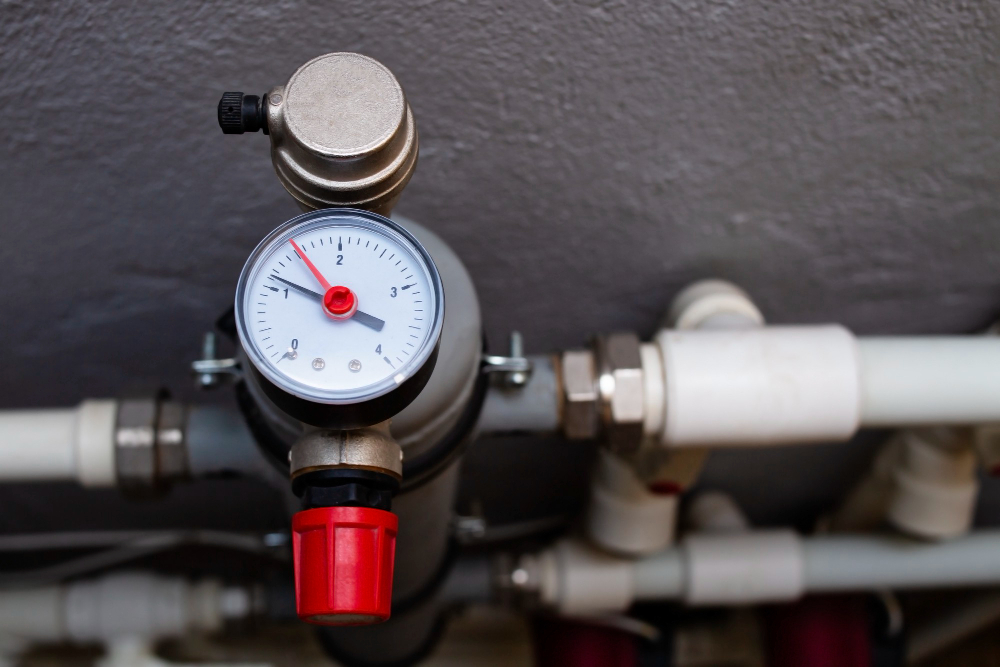
Most homeowners never think about which direction water flows through their plumbing, because under normal conditions it only moves one way, from the supply line into the house. Backflow is what happens when that direction reverses, and it's one of the more serious plumbing risks that gets almost no attention until something goes wrong.
Mat-Su Valley properties face a particular version of this risk. Irrigation systems, wells on the same property as municipal hookups, and a mix of older and newer plumbing all create the kind of cross-connections that make backflow possible in the first place.
A backflow preventer stops contaminated water from being pulled or pushed back into the clean supply. Testing that device on a schedule is what actually confirms it's still doing its job, since a backflow preventer can fail quietly, with no visible sign until a contamination event actually happens.
In this article, you will learn about:
- What backflow actually is and why it happens
- The specific risks Mat-Su Valley properties face
- What backflow prevention testing involves
- How often testing should happen and who needs it most
Keep reading to understand exactly what's protecting your water supply, and why that protection needs regular checking to keep working.
Water only flows one way, until something goes wrong
Every plumbing system is built on one quiet assumption: water moves from the supply line into the house, never the other direction. Backflow is what happens when that assumption fails, and the two mechanisms behind it work in opposite ways.
When a pressure drop pulls contaminated water backward
Back-siphonage occurs when pressure in the main supply line drops suddenly, creating a vacuum effect that pulls water backward from wherever it's sitting. That includes a garden hose left in a bucket, an irrigation line, or anything else connected to the system at the moment pressure falls.
A nearby water main break or sudden high-demand event, like heavy firefighting draw, is often what triggers that pressure drop in the first place. The homeowner rarely notices the moment it happens, since nothing about the water itself changes right away.
When pressure on your side pushes water the wrong way
Back-pressure works the opposite way. It happens when pressure on the private side of a connection, a boiler, a pump, or a similar system, exceeds the pressure coming from the supply line, pushing water backward into the system instead of pulling it.
Either mechanism can pull contaminated water into a home's plumbing, and from there potentially into the broader water supply if the property connects to a municipal system. That's why cross-connection control exists as a formal category of plumbing safety, not just a theoretical concern.
The scale of this risk is bigger than most people assume
The EPA has documented more than 400 backflow incidents between 1970 and 2001, resulting in over 12,000 reported cases of illness nationwide, and the agency itself notes that backflow events are chronically underreported.
That underreporting matters. Most people who get sick from contaminated tap water never connect it to a backflow event, since the water often looks, tastes, and smells normal even when it isn't. Beyond the health impact, the EPA's own cost analysis found that water systems spent an average of 60.8 hours and roughly 1,820 dollars mitigating a typical backflow incident, not counting the eleven most severe cases in their dataset, which ran far higher. A functioning backflow preventer is what stands between a cross-connection and an actual contamination incident, quietly, every single day it works correctly.
What makes a Mat-Su Valley property vulnerable
Not every property carries the same backflow risk, and the setups that create the most exposure are common across the Mat-Su Valley specifically. Knowing which of these applies to your property is the first step toward closing the gap.
Your irrigation system is a textbook cross-connection
The Mat-Su Valley's long summer daylight hours support serious home gardening and lawn irrigation, and that's exactly the kind of setup that requires backflow protection. An irrigation line connected to the potable supply without a proper vacuum breaker or backflow preventer is a textbook cross-connection.
Seasonal use adds a wrinkle here. A system that sits unused all winter and gets reactivated each spring is exactly the kind of installation that benefits from a pre-season check, since a valve or assembly can fail during the off-season without anyone noticing until the system runs again.
- Confirm the irrigation system has an approved backflow prevention device, not just a simple check valve
- Test the assembly each spring before the irrigation season starts, not partway through
- Replace any hose bib vacuum breaker that shows visible wear or won't seat properly
- Keep a record of test dates in case a local jurisdiction requires documentation
Property owners who install their own outdoor plumbing and irrigation setups sometimes skip this step entirely, assuming a standard sprinkler valve provides the same protection. It doesn't.
A well next to municipal water raises the stakes
Some Mat-Su Valley properties have a private well alongside a municipal connection, or share a water source with a neighboring property. Nationally, about 15 percent of the U.S. population relies on a private well for at least part of its drinking water, and Alaska's rural geography puts a lot of Mat-Su Valley homes squarely in that group. Any physical interconnection between a well and a municipal system creates one of the highest-risk cross-connection scenarios that regulators track.
If a well and a municipal line are ever cross-connected without proper backflow protection, well water, including anything in it, can potentially move into the shared or municipal supply during a pressure drop. That risk runs in both directions depending on which side loses pressure first.
That kind of interconnection is easy to overlook on older properties where a previous owner made changes without leaving documentation behind. A few checks can confirm whether the risk actually exists on a given property before assuming the worst.
- Review property records or plumbing plans for any documented interconnection
- Ask a technician to trace the plumbing layout if records are incomplete or missing
- Confirm an approved backflow assembly protects any interconnection that does exist
- Flag the finding to the local water authority if a documented connection lacks protection
That kind of tracing work matters most on older Mat-Su Valley properties, where wells predate a later municipal or shared connection and the two systems were never formally separated.
Commercial connections face a stricter bar
Backflow requirements typically scale with the level of hazard a property represents, and commercial operations, multi-unit buildings, and anything with a boiler or industrial process generally face stricter and more frequent testing requirements than a typical single-family home. Local water purveyors assess this hazard level when a new connection goes in.
A property owner running a small business out of a Mat-Su Valley location, especially anything involving chemicals, food service, or industrial equipment, should confirm what testing frequency actually applies rather than assuming residential standards cover it. That confirmation usually comes from whichever utility or jurisdiction administers the local cross-connection control program, since Alaska handles this at the local level under 18 AAC 80 rather than through a single statewide certification system.
What actually happens during a backflow test
A backflow prevention assembly is a mechanical device, and like any mechanical device, its internal components can wear out, stick, or fail over time. Knowing what a technician actually checks, and why a device that looks fine can still fail, makes the process a lot less mysterious.
The assemblies a technician checks and how
Common assembly types include atmospheric vacuum breakers, pressure vacuum breakers, and reduced pressure principle backflow preventers, each suited to different hazard levels and installation types. The right assembly for an irrigation system usually isn't the right assembly for a boiler or a commercial connection.
- The technician connects calibrated test equipment to the assembly's designated test cocks
- Pressure readings confirm whether check valves are holding and relief valves are functioning correctly
- Any assembly that fails testing gets flagged for repair or replacement before it's approved
- Results are documented and often reported to the local water authority or jurisdiction
That documentation step matters more than most homeowners expect. Some jurisdictions require proof of a passing test before renewing a permit or approving a property transaction.
A device that looks fine can still be failing quietly
A backflow preventer's failure mode is quiet, and that's exactly the problem. Rubber seals degrade, springs weaken, and debris can lodge in a check valve, all without producing any visible sign that anything is wrong.
That's fundamentally different from a leak, which announces itself. A failed backflow preventer only reveals the failure during an actual backflow event, at which point the protection it was supposed to provide is already gone.
A few internal signs can hint that an assembly is wearing out before it fails outright, even without a formal test.
- A faint hissing or dripping sound near the assembly that wasn't there before
- Visible corrosion or mineral buildup on the exterior housing
- A relief valve that discharges water more often than it used to
- An assembly that's noticeably older than its typical rated service life
None of these guarantee a failure is imminent, but they're worth mentioning to a technician during the next scheduled test. Annual testing exists specifically to catch this kind of silent failure before it matters, rather than relying on a symptom that may never appear until it's too late.
A failed test is the start of a fix, not a disaster
A failed backflow test isn't the end of the process, it's the start of a repair conversation. Most assemblies can be rebuilt with new internal components rather than replaced outright, which keeps the cost and disruption manageable in most cases.
Retesting after a repair confirms the fix actually worked, closing the loop on the original failure. Property owners sometimes assume a failed test means an expensive full assembly replacement. In practice, a straightforward rebuild resolves most failures identified during routine testing.
How often you actually need to test, and who needs it most
Most jurisdictions that require backflow testing at all set an annual schedule as the baseline, and that cadence lines up with how these mechanical assemblies actually degrade over time. But a few situations mean you shouldn't wait for the calendar to tell you it's time.
Annual testing is the baseline, not the ceiling
A yearly test catches the slow wear that eventually leads to failure, before it becomes a real contamination risk. Alaska handles enforcement locally rather than through a single statewide program, which means the exact requirement for a given Mat-Su Valley property depends on which water purveyor or local jurisdiction has authority over that connection.
- Irrigation systems: test before each irrigation season begins, typically annually
- Boilers and hydronic systems: test annually or per local jurisdiction requirement
- Properties with a well-and-municipal interconnection: verify protection status and test per local requirement
- Commercial and multi-unit properties: confirm the specific frequency with the local water authority, since it often exceeds residential standards
Skipping a scheduled test doesn't just risk contamination, it can also create compliance problems if a jurisdiction later asks for documentation that doesn't exist.
Some situations call for a check outside the normal cycle
Any time a new fixture, irrigation zone, or secondary water source gets added to a property, the backflow protection covering that connection deserves a fresh check rather than an assumption that the existing device still covers the new setup. A sudden pressure drop somewhere in the neighborhood, or any event that could have triggered back-siphonage, is also worth a check even if the scheduled test date is still months away.
Property owners preparing to sell or refinance sometimes discover backflow testing was never done, or lapsed years earlier, during an inspection. Catching that gap ahead of a transaction avoids a last-minute scramble.
Make sure whoever tests it is actually qualified for your jurisdiction
Alaska doesn't run a single statewide backflow tester certification program, which means the qualifications required of a tester can vary by jurisdiction. Confirming a technician's certification matches what your specific local water authority requires avoids a situation where a completed test doesn't actually satisfy the requirement.
Prospector Plumbing and Heating understands both the mechanical side of these assemblies and the documentation local jurisdictions expect, which keeps a routine test from turning into a repeat visit over paperwork. Getting ahead of testing, rather than waiting for a jurisdiction or a property transaction to force the issue, is the difference between a routine annual task and an unexpected compliance headache.
Conclusion
Backflow prevention testing protects something most Mat-Su Valley homeowners never think about directly, the simple assumption that water only flows one way through their plumbing. Irrigation systems, wells on shared properties, and boilers all create the kind of cross-connections that make backflow possible, and a preventer assembly is the only thing standing between that possibility and an actual contamination event.
None of this requires constant attention. An annual test, done on schedule and by someone who understands both the mechanics and the local documentation requirements, catches the slow, silent failures before they become a real problem.
If your property has an irrigation system, a well alongside municipal water, a boiler, or any other cross-connection risk, and you're not sure when it was last tested, that's worth checking before the next irrigation season or property transaction forces the question.
Prospector Plumbing and Heating tests and services backflow prevention assemblies across the Mat-Su Valley and can confirm exactly what your property needs and how often. Contact Prospector Plumbing and Heating to schedule your backflow prevention test.
Licensed & insured Alaska plumbing and heating. Locally owned and operated! We're the happiest plumbers in Alaska and go the extra mile on every job!
Fairbanks
135 32nd Avenue
Fairbanks AK 99701
North Pole
North Pole, AK 99705
Mat-Su Valley
1712 N Williwaw Way
#1 Wasilla, AK 99654
Eagle River
AK 99577