

How Interior Alaska's permafrost affects your home's plumbing
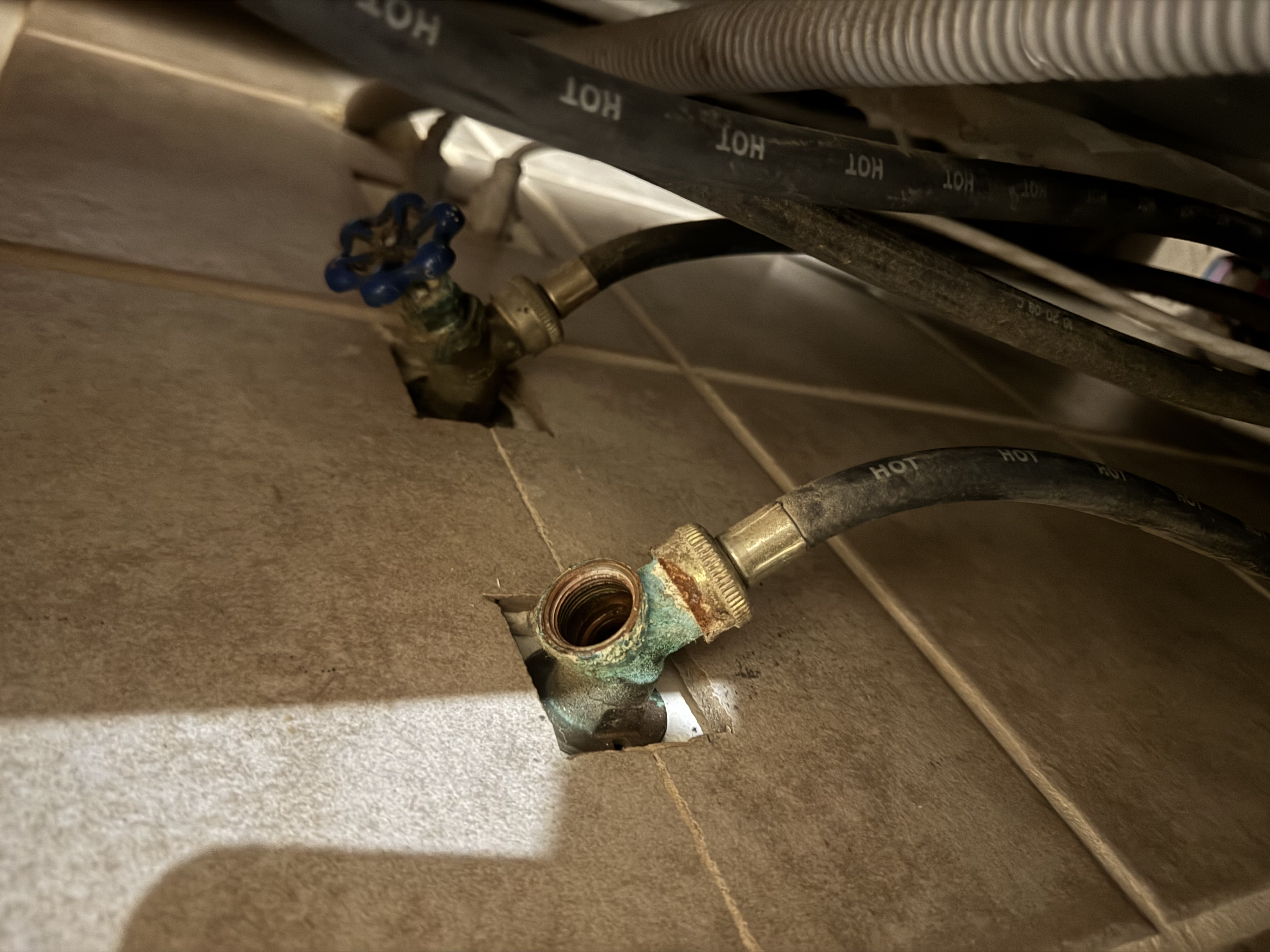
Your house isn't sitting on solid, unmoving ground the way it would almost anywhere else in the country. Beneath a lot of Interior Alaska properties, the soil itself shifts with the seasons, and that shifting eventually finds its way into your pipes.
Permafrost and seasonal frost are two different things, but homeowners often lump them together. One is ground that stays frozen year-round. The other is the layer above it that freezes and thaws every single winter and spring, and that annual cycle is usually what causes the plumbing headaches people actually notice.
Either way, the ground beneath a Fairbanks or North Pole home is rarely as stable as it looks. Understanding what's actually happening underground changes how you think about a slow drain, a cracked slab, or a water line that stops working every January.
In this article, you will learn about:
- The real difference between permafrost and seasonal frost heave
- How frozen or shifting ground damages plumbing specifically
- Why burial depth and pipe placement matter so much here
- What you can do to protect your system through the winter
Keep reading to see exactly where the ground meets your plumbing, and what that means for keeping your home running through another Interior Alaska winter.
Permafrost and frost heave: what's actually happening underground
What permafrost means for a home site
Permafrost is ground that stays below freezing for at least two consecutive years, sometimes for centuries. It sits beneath a shallower "active layer" of soil that still thaws each summer and refreezes each winter.
That active layer is the part that actually moves. As it thaws, it can turn into soft, saturated soil with very little strength to support a structure, and as it refreezes, it expands again. Research from the University of Alaska Fairbanks Cooperative Extension Service confirms that thawed permafrost soils can shift into a weak slurry with little supporting strength, which is exactly the condition that leads to foundation failure.
Not every North Pole or Fairbanks lot sits on permafrost, and soil surveys vary block by block. But where it exists, it changes the calculus for anything buried in the ground, plumbing included.
Frost heave and why it happens every single winter
Frost heave is the more universal problem, and it happens whether or not permafrost is present underneath. It's driven by moisture moving up through soil toward the freezing layer and expanding as it turns to ice.
That expansion physically lifts whatever sits above it, foundations, slabs, and buried pipe runs alike. When spring arrives and the ice melts, the ground drops back down, sometimes unevenly, leaving gaps and settling that weren't there before.
A few soil conditions make frost heave worse:
- Fine-grained soils like silt and clay, which hold more moisture than sand or gravel
- Ground with poor drainage, where water pools before freezing
- Disturbed soil around a foundation or trench that hasn't fully settled
- A lack of snow cover, which normally insulates the ground and slows freezing
Fairbanks sits in a region with notably dry, exposed soils in places, and frost penetration there can run far deeper than in areas with consistent snow cover protecting the ground.
Why Interior Alaska sees this more than almost anywhere else
Fairbanks has a documented design frost depth of roughly 42 inches for standard footings, and in dry, exposed soils without snow cover, actual frost penetration in a severe winter can push past 8 feet. That is a dramatic range for a single region, and it's part of why plumbing installed to a generic national standard sometimes fails here.
Anchorage and Southcentral Alaska use different depth requirements than Fairbanks, since soil type, snow cover, and winter severity all vary by region. A pipe buried to code in one Alaska community isn't automatically safe in another.
This regional variability is exactly why local knowledge matters more here than almost anywhere else in residential plumbing. A technician who only knows generic Lower 48 standards can genuinely get burial depth wrong in Interior Alaska.
How shifting ground damages buried pipes
Buried water and sewer lines under pressure
Water expands by roughly 9 percent when it freezes, and inside a sealed pipe, that expansion can generate pressure far beyond what standard copper, PEX, or PVC pipe is rated to handle. That pressure typically doesn't rupture the pipe right where the ice forms.
Instead, it usually fails downstream, at a closed valve, a fitting, or a restricted section where the pressure wave has nowhere left to go. That's why a frozen-pipe repair sometimes happens in a completely different spot than where the ice actually formed.
Frost heave adds a second layer of stress on top of freezing itself. As the ground around a buried line lifts and drops each season, it flexes and shifts pipe joints and fittings that were never designed to move.
- Moisture in the soil migrates toward the freezing front
- Ice crystals form and expand, lifting the soil and anything buried in it
- Pipe joints and fittings flex under that movement, sometimes repeatedly each winter
- Weakened joints eventually leak or fail, often years after installation
That repeated cyclical stress is part of why plumbing in permafrost or frost-heave-prone soil tends to need more frequent inspection than plumbing in more stable ground.
Sewer lines and why camera inspection matters here
Buried sewer lines take the same seasonal punishment as water lines, but a shifting or cracked joint often shows up first as a slow drain rather than an obvious leak. That makes it easy to mistake ground-movement damage for an ordinary clog.
Sewer line problems tied to frost heave usually show a pattern: the same fixture backs up every winter, or a drain that ran fine for years suddenly slows every cold season and clears again by summer. That seasonal rhythm is itself a clue.
A camera inspection is often the only reliable way to tell a straightforward blockage apart from a joint that's separating because the ground underneath it keeps moving. Guessing between the two usually costs more than checking.
Real infrastructure damage, not just theory
This isn't a hypothetical concern specific to old or poorly built homes. A peer-reviewed analysis published in Communications Earth & Environment projects that building and road damage from permafrost thaw across Alaska could reach 37 to 51 billion dollars by mid-century under medium and high emission scenarios.
That same research documents a real case where a buried water pipe in degrading permafrost broke and left an entire community without water for days, since the surrounding infrastructure had nowhere reliable to route emergency repairs. It's a stark reminder that permafrost-related plumbing failure isn't limited to minor inconvenience.
Locally, cold snaps have already caused documented plumbing disruption across the state. A 2026 cold event in the Mat-Su region caused roughly 50 frozen pipe incidents among the area's sewer users in a single season, which shows how quickly a hard freeze can cascade into widespread plumbing failures even outside the deepest permafrost zones.
What ground movement means for your foundation and fixtures
Foundations, slabs, and the plumbing running through them
A home's foundation and the plumbing inside it are more connected than most homeowners realize. Slab foundations aren't generally recommended in permafrost zones, since heat from the building itself can thaw the frozen ground directly beneath it.
When that happens unevenly, the slab can crack, and any plumbing running through or under the slab becomes expensive and disruptive to repair. Crawlspace foundations, more common across Southcentral Alaska, carry a different but related risk of frozen pipes in an unheated or poorly insulated space.
- Slab cracking from uneven ground thaw beneath the foundation
- Pipe joints stressed by seasonal foundation movement
- Crawlspace lines exposed to cold air without adequate insulation
- Settling that pulls buried lines away from fixture connections
None of these failures happen overnight. They accumulate season after season until a homeowner notices a leak, a drop in pressure, or water where it shouldn't be.
Fixture and appliance stress that gets blamed on other things
A water heater that short-cycles, a toilet that suddenly rocks slightly on the floor, or a faucet that develops a persistent drip can all trace back to ground movement rather than the fixture itself failing on its own. Homeowners usually replace the part first and only discover the real cause after it happens again.
Appliances connected to fixed plumbing points are especially sensitive to even small amounts of settling, since a connection that was level when installed can end up slightly misaligned within a couple of seasons. That misalignment stresses seals and joints long before it becomes an obvious leak.
Watching for repeat failures in the same spot, rather than treating each one as an isolated incident, is often what reveals ground movement as the real culprit.
Outdoor spigots, hydrants, and exterior connections
Anything mounted at the exterior of a home sits at the most exposed point in the entire plumbing system, and frost heave near the foundation can shift these connections more than interior lines ever experience. An outdoor plumbing fixture that worked fine last fall can bind, leak, or crack after a single hard freeze-thaw cycle right at the wall penetration.
That exterior point is also where insulation gaps are easiest to miss, since it's the transition between conditioned indoor space and raw ground. A small gap there does more damage over a winter than most homeowners expect.
Checking exterior connections each fall, before the ground starts moving in earnest, catches most of these problems while they're still simple fixes.
Protecting your plumbing through Interior Alaska winters
Getting burial depth and pipe placement right
Correct burial depth is the single most effective defense against frost-related plumbing failure, and it's not something a homeowner can eyeball. The Alaska Plumbing Code sets minimum burial depths for water service lines based on local frost depth data, and Interior Alaska frost depths commonly reach 8 to 10 feet in severe conditions.
Pipe routing matters as much as depth. Lines placed too close to an exterior wall, under a driveway that gets plowed and compacted, or through disturbed fill soil are more exposed to frost than lines placed with those risk factors in mind.
- Confirm burial depth matches current Interior Alaska frost data, not a generic national code minimum
- Avoid routing new lines through recently disturbed or loosely compacted soil
- Keep buried lines away from areas that get cleared of snow regularly, since snow removal drives frost deeper
- Consider insulation or heat tape for any line that can't reach full recommended depth
Retrofitting an older home's water line depth isn't always practical, which is part of why insulation and heat tape remain common solutions for lines installed before current frost data was available.
Winterizing what's already in the ground
Even a well-placed line needs seasonal attention here. Shutting off a water main and calling it winterized is a common mistake, since isolating the supply doesn't drain water sitting in low points, traps, and fixtures that can still freeze.
A slow, steady trickle of water from a single faucet during the coldest stretches keeps water moving through the system and reduces the odds of a hard freeze setting into one static section of pipe. It's a small habit that costs almost nothing and prevents a lot of expensive repairs.
- Fully drain exposed or vulnerable lines rather than just shutting off the main
- Run a small, steady trickle from a faucet during extreme cold snaps
- Check crawlspace and exterior wall lines for adequate insulation before winter
- Inspect pipe insulation and heat tape each fall, not mid-winter when a failure is already underway
Waiting until a pipe actually freezes to check your winterization setup means troubleshooting during the exact conditions that caused the problem in the first place.
When ground movement means it's time for a professional look
Some signs point to something more serious than routine seasonal freeze-thaw. A slab crack that widens year over year, a water line that fails at the same point every winter, or a fixture that suddenly won't drain despite no obvious blockage all deserve a real inspection.
A technician who understands local frost and permafrost patterns can tell the difference between a simple repair and a sign that the ground itself is the underlying issue, not just the pipe.
If your home sits on or near mapped permafrost, or you've noticed recurring frozen-pipe problems in the same spot every winter, it's worth having someone assess the ground before another cold season adds to the damage.
Conclusion
Interior Alaska's ground doesn't behave like ground almost anywhere else, and that difference runs straight through your plumbing whether you think about it or not. Permafrost, frost heave, and the deep seasonal freeze that defines a Fairbanks or North Pole winter all put real, repeated stress on buried lines, foundations, and fittings.
None of this means every home here is destined for expensive repairs. It means the standard advice that works in a milder climate doesn't automatically apply, and burial depth, pipe routing, and winterization habits all need to reflect the ground you're actually building and living on.
If you've noticed recurring frozen pipes, foundation cracks that seem tied to the seasons, or a water line that fails every winter in the same place, get a professional assessment before the next cold snap makes the problem worse.
Prospector Plumbing and Heating has worked on homes across Fairbanks, North Pole, and the Mat-Su Valley long enough to know how this ground behaves through every season. Contact Prospector Plumbing and Heating to have your plumbing and burial depth checked before winter tests it again.
Licensed & insured Alaska plumbing and heating. Locally owned and operated! We're the happiest plumbers in Alaska and go the extra mile on every job!
Fairbanks
135 32nd Avenue
Fairbanks AK 99701
North Pole
North Pole, AK 99705
Mat-Su Valley
1712 N Williwaw Way
#1 Wasilla, AK 99654
Eagle River
AK 99577